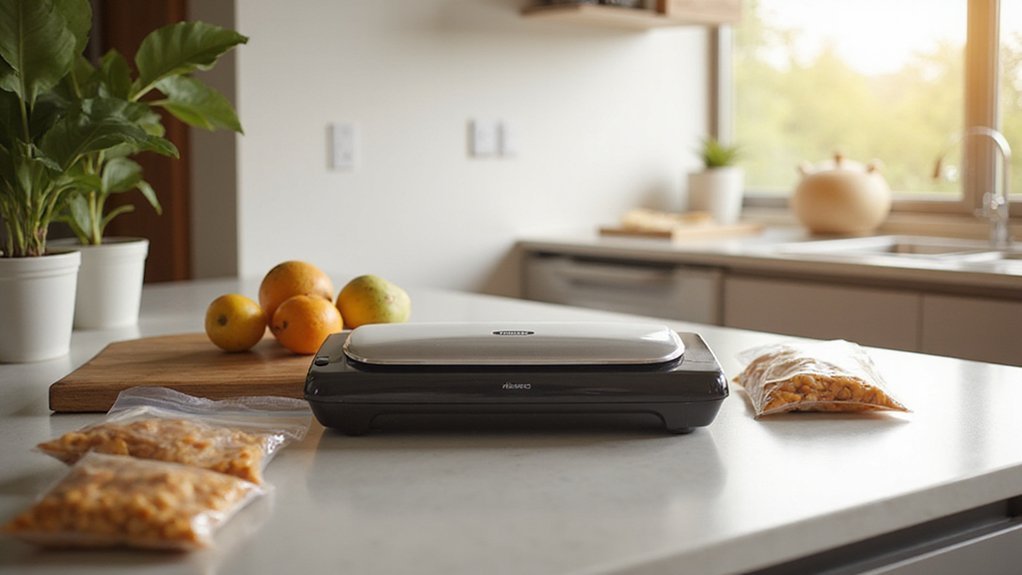
Wondering if investing in a vacuum sealer is worth it? You might be surprised to learn how much longer food can stay fresh and how much money you can save.
It creates an airtight seal that slows spoilage and reduces waste, making it a helpful tool for many households.
Keep reading to see if a vacuum sealer fits your needs.
Is a Vacuum Sealer Worth It for Your Home?
A vacuum sealer is worth it if you frequently buy in bulk or freeze food regularly. It effectively extends the freshness of your food by removing air, which helps prevent freezer burn and spoilage. This can significantly improve your kitchen organization, as it allows you to package larger portions of meats, vegetables, or pantry staples efficiently. Sealing food also reduces mess and saves space by eliminating excess packaging. Additionally, understanding how a vacuum sealer works can help you use it more effectively and ensure food safety. Proper jar sanitation practices are essential to maintaining food quality when storing items long-term. However, it’s important to remember that a vacuum sealer does not replace proper refrigeration or freezing; safety guidelines still apply. If you’re considering storing liquids or wet foods, proper sealing techniques are crucial to prevent leaks — which is an important aspect of can sealing techniques. If reducing waste and maintaining food quality are priorities for you, investing in a vacuum sealer can be a smart choice. If you mostly buy small grocery loads or rarely store leftovers, you might find it unnecessary.
How Do Vacuum Sealers Extend Food Shelf Life?
Vacuum sealing extends food shelf life primarily by controlling oxygen levels. Removing oxygen from bags or containers and sealing them tightly creates an airtight environment that slows down spoilage. This is especially effective for reducing oxidation**, which can cause fats to go rancid and color changes in foods like meat. This process typically produces a low-oxygen, high-carbon-dioxide environment that further suppresses microbial activity. Although vacuum sealing does not sterilize food, it can extend shelf life by three to five times compared to traditional storage methods. When combined with proper refrigeration or freezing temperatures, vacuum sealing preserves the food’s freshness and texture while also preventing freezer burn, making it an essential technique for efficient food preservation. Proper sealing also helps prevent freezer burn by reducing exposure to air and moisture. Understanding oxygen levels** in packaging is crucial to maximizing the effectiveness of vacuum sealing for food storage.
Can Vacuum Sealers Help Save Money and Reduce Waste?
Vacuum sealers can significantly help you save money and cut down on food waste. If you buy in bulk or cook meals ahead of time, vacuum sealing allows you to divide large quantities into individual portions. This way, you avoid guessing how much to thaw or serve, which helps prevent leftovers from spoiling. It also improves storage organization, enabling you to fit more items into your freezer while keeping everything easy to find. Additionally, decorative canning jars can be used to store and display small portions or leftovers, adding a charming touch to your kitchen. Understanding row cover benefits can inspire homesteaders to protect their food crops, ensuring a sustainable and cost-effective food supply. Incorporating freeze drying into your food preservation methods can further extend the shelf life of your stored items, offering versatile options for home and industry use.
What Are the Safety Risks and Limitations of Vacuum Sealing?
Vacuum sealing alone does not eliminate bacteria; it only removes oxygen from the packaging. Bacteria such as *Clostridium botulinum* can survive and grow in low-oxygen environments, especially in low-acid foods stored at room temperature. This increases the risk of food poisoning if food is not stored properly. Spoilage signs like bad smell or mold might not develop, making it harder to tell if the food is safe to eat. Proper storage is essential because vacuum sealing is not a substitute for refrigeration, freezing, or canning. Leaving food out at room temperature or ignoring expiration dates can allow dangerous bacteria to grow, even if the packaging looks fine. Always handle and store vacuum-sealed foods carefully to minimize health risks. Understanding food safety risks related to vacuum sealing is crucial to prevent health hazards.
Is Investing in a Vacuum Sealer a Good Choice for Your Budget?
Investing in a vacuum sealer can be worthwhile if you plan to use it frequently. If you often freeze food, buy in bulk, or prepare meals in batches, a vacuum sealer can save money by extending food freshness and cutting down on waste. External models priced around $20 to $40 are suitable for occasional use, but their seal quality and durability may not be consistent. Remember, ongoing costs for bags and rolls also affect long-term value; reusing supplies or choosing compatible, affordable options makes a big difference. For regular food storage, a mid-priced external sealer offers a good balance of affordability, reliable sealing, and durability. If you only need it now and then, the initial expense might not be justified, but if you use it often, it can become a cost-effective addition to your kitchen. Additionally, even low-cost models can perform well for basic needs, making them a cost-effective solution for casual users. It’s also important to consider that some vacuum sealers are designed to work with food storage containers, which can further enhance their convenience and versatility. Incorporating proper storage practices can help maximize the benefits of your vacuum sealer and prevent spoilage.
Who Should Use a Vacuum Sealer for Best Results?
Vacuum sealers are best suited for individuals who process and store large quantities of food regularly. If you hunt, fish, or farm, a vacuum sealer can significantly extend your food storage life. Advanced sealing technology ensures a tight, reliable seal that can keep foods fresh for months in the freezer or for hours during sous vide cooking. Vacuum sealing helps prevent freezer burn and moisture loss, making it possible to preserve meat and produce up to five times longer than traditional methods. It’s also ideal for bulk shoppers and batch cooks who want to reduce waste and maximize storage space. Home cooks using sous vide benefit from airtight seals for precise temperature control, while pantry organizers can keep dry goods fresh longer. If your routine involves handling large amounts of food or you want to maintain peak freshness, investing in a vacuum sealer offers practical and proven benefits. Additionally, understanding canning jar lids reuseability can help you make more informed choices about food preservation options. Efficiency and cost savings are additional advantages, especially over time, as the initial investment can lead to significantly lower costs on pouches and reduce food waste. Incorporating proper sealing techniques, such as following specific guidelines to avoid punctures or leaks, can further enhance the longevity and effectiveness of your vacuum-sealed goods.