Struggling to keep your food fresh and prevent spoilage? A good vacuum sealer can make a big difference by removing air from bags or containers, slowing down the chance of spoilage.
The best models feature strong vacuum power, reliable seals, and sometimes extras like moisture control.
Whether you need an external or chamber sealer depends on your food storage habits.
Keep reading to find out how to choose the perfect one for your kitchen.
What Is a Food Vacuum Sealer and How Does It Work?
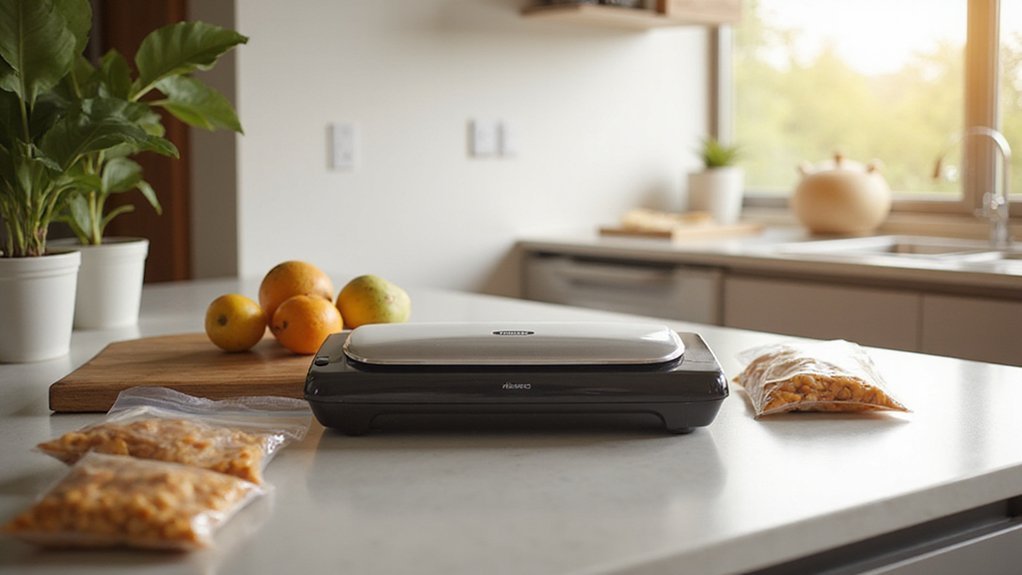
A food vacuum sealer works by removing air from specially designed bags or containers and then sealing them airtight. The machine’s vacuum pump pulls out most of the air, creating a low-oxygen environment that helps slow down oxidation and bacterial growth, both of which cause spoilage. Once the air is removed, a heating element fuses the bag edges, sealing everything inside tightly. This airtight seal prevents freezer burn and keeps food fresh longer, sometimes up to five times longer than traditional storage methods. Additionally, vacuum sealing makes storage more efficient, as the packages are more compact and easier to organize in your fridge or freezer. This process also reduces cross-contamination, enhancing food safety. With just seconds, the sealer protects your food’s freshness and maximizes storage space through quick and reliable sealing. The vacuum pump acts as the core component that creates this controlled environment, making the process highly effective. It’s important to use high-quality vacuum sealer bags to ensure the best results and freshness preservation. Using a vacuum sealer also supports extended shelf life, which is especially important for homesteaders looking to preserve seasonal harvests.
External Suction vs. Chamber Sealers: Which Is Better for Your Needs?
External suction sealers are typically more suited for dry, solid foods. They operate by pulling air from outside the bag through a sealing strip, making them ideal for packaged items such as grains, snacks, or freeze-dried foods. These sealers are compact, lightweight, and more affordable, which makes them a good choice for small kitchens or occasional sealing tasks. They require specific embossed or channel-style packaging materials designed to work with external suction technology, which may limit flexibility. Overall, external suction sealers are simple to use and effective for dry foods but may struggle with liquids or irregularly shaped items. Additionally, they are generally less effective at meat preservation, especially for items with moisture or irregular textures.
Key Features to Consider When Choosing a Vacuum Sealer
Choose a vacuum sealer with a strong vacuum pressure, ideally between 25 and 28 inHg. This ensures thorough air removal, which is crucial for preserving flavor and preventing spoilage. Reliable seal quality is also important; look for models with double-seal bars and adjustable heat settings to prevent leaks and extend freshness. Food compatibility features like moisture detection sensors and hand controls help protect delicate items such as liquids or marinated foods from improper sealing. Bag versatility matters too—nonproprietary sizes and built-in roll storage provide flexibility and reduce ongoing costs. User-friendly features such as simple controls, automatic shut-off, and multiple sealing modes make operation smoother and faster. For long-term reliability, opt for a compact design with durable components and energy-efficient operation to maximize value and minimize expenses over time. Additionally, selecting a model with optimal vacuum pressure ensures better preservation of food items. Ensuring the vacuum sealer incorporates reliable components can also significantly extend its lifespan and performance. Regular maintenance and proper sealing techniques further contribute to consistent results and overall device longevity.
How to Test Seal Quality and Pump Power
To test the seal quality and pump power of your vacuum sealer, start with simple leak detection methods. For seal integrity, perform a bubble leak test: place an empty bag filled with air in water, then run the sealing cycle. If you see escaping bubbles, the seal is compromised. Another option is dye ingress testing: after sealing, submerge the bag in water with a small amount of dye and look for dye intrusion, which indicates leaks. Monitoring pipe options for your specific vacuum setup can also ensure optimal performance. To assess pump performance, measure how long it takes to evacuate the air. External vacuum sealers should reach full vacuum in about 35 seconds, while chamber models typically do so within 65 seconds. A steady decline on the vacuum gauge confirms the pump is functioning properly. It’s also important to regularly inspect and clean your vacuum sealer’s gasket and sealing bars to prevent weak seals. Additionally, ensure your sealing bars are clean, dry, and heated evenly. Uneven or weak seals often come from gasket issues or improper temperature settings. Regularly conducting these tests helps you verify that your sealer maintains optimal pump efficiency and produces consistent, reliable seals. Proper maintenance and understanding of vacuum pressure can also prolong the life of your equipment and improve sealing performance.
What Are the Best Vacuum Sealers for Different Types of Food?
Different types of food benefit from specific vacuum sealing techniques and equipment to maximize freshness and prevent spoilage. For meats and poultry, chamber vacuum sealers are the best choice because they can handle liquids and frequent sealing cycles without loss of seal quality. These sealers are ideal for bulk storage and support moisture-rich foods like roasts or ground meats. The FoodSaver V4840 and Nesco VS-12 are popular options, offering reliable seals and ease of use for these needs. Vacuum Sealer Power and Design When sealing cheese and deli items, choose models with moist and dry modes, such as the FoodSaver VS3150. These settings help protect delicate textures by controlling air exposure and reducing moisture loss. For produce, gentle vacuum settings are essential to avoid crushing soft fruits and vegetables. The FoodSaver V4840, with its adjustable vacuum controls, suits households that store a variety of fresh produce. Blanch-and-freeze techniques for soft fruits and vegetables require careful sealing to prevent bruising. Chamber vacuum sealers are particularly effective here since they can slowly remove air to keep produce intact. Additionally, selecting a vacuum sealer with a reliable seal ensures long-lasting freshness and prevents spoilage during storage. Choosing the right vacuum sealer for each food type ensures optimal preservation, versatile cooking options, and extended shelf life.
Budget vs. Premium Vacuum Sealers: Which Should You Buy?
Choosing between a budget and a premium vacuum sealer depends on how often you plan to use it, the types of foods you want to store, and your budget. Budget models, typically priced around $30 to $40, are suitable for occasional use and simple food storage. They offer decent sealing speeds and basic durability in vacuum bags but usually lack automatic functions, specialized modes, and liquid sealing capabilities. These models are compact and affordable, making them ideal for light, infrequent sealing tasks. However, they can still effectively preserve food quality for short-term storage or small batches. For those who need a reliable option for regular preservation, investing in a quality vacuum sealer can be a worthwhile decision. Premium vacuum sealers, generally costing between $150 and $375, are better suited for regular or heavy-duty use. They feature advanced functions such as double-seal technology, moisture-resistant settings, and faster sealing speeds. These models outperform budget options in vacuum bag durability and consistency, especially when sealing a variety of foods or for long-term storage needs. Investing in a premium sealer can be more cost-effective if you frequently preserve large quantities or delicate foods that benefit from more precise sealing. Additionally, understanding proper sealing techniques is essential to maximize the longevity of your stored foods and ensure optimal freshness.
Must-Have Accessories and Compatibility Tips
Choosing compatible accessories is crucial for optimal sealing performance. Most vacuum sealers support various attachments like jar sealers, canisters, and liquid handling aids, but always verify compatibility with your specific model before purchasing. This step helps ensure that you select accessories designed for your machine’s sealing system, preventing mishaps during operation. Verification helps prevent sealing failures caused by mismatched components. Bag rolls and pre-cut bags come in widths of 8, 11, or 12 inches. Match the width to your sealer’s sealing strip for a proper seal; for example, 8-inch bags suit smaller items, while 12-inch bags accommodate larger or multiple items. Consider extra-wide or longer bags for bulky or irregularly shaped objects.
Many vacuum sealers include a basic set of accessories, yet purchasing extras like bone guards, marinade canisters, or sealing taps can expand your options. Always review the manufacturer’s specifications and recommendations; generic accessories may not align perfectly with your machine’s ports or sealing mechanism. Compatibility issues can lead to improper sealing, leaks, or damage. Investing in proper, manufacturer-approved accessories ensures your sealer works efficiently and maintains a tight, reliable seal every time. Understanding heat barriers for wood stoves can help in choosing equipment that complements your sealing setup and prevents heat damage. Additionally, considering machine compatibility with accessories ensures optimal performance and longevity of your vacuum sealer.
How to Keep Your Vacuum Sealer Working Like New
To keep your vacuum sealer working like new, regular maintenance is essential. After each use, wipe the sealing area with a soft cloth to remove food bits, grease, and particles that can weaken the seal. If necessary, use mild soap and ensure all parts are air-dried thoroughly before reassembling. Regularly inspect the sealing strip, gaskets, and hoses for cracks, warping, or other signs of damage. Replace any damaged parts promptly to maintain airtight sealing performance. Proper storage in a dry, stable environment protects the sealer from humidity and temperature extremes, further extending its lifespan. Additionally, it’s helpful to understand the importance of routine maintenance for preventing common issues and ensuring optimal performance. Since some vacuum sealer bags are reusable, inspecting them for tears or punctures after each use can prevent potential spoilage or messes.
How to Pick the Best Food Vacuum Sealer for Your Kitchen
Choose a full-size vacuum sealer if you package larger batches or bulk foods. These models typically have wider sealing bars and stronger motors, ensuring reliable seals even on big portions. Look for devices like the Nesco VS-12 or Anova Precision Vacuum Sealer Pro for heavy-duty performance. For handling liquids or moist foods, select a sealer with excellent moisture control capabilities to prevent leaks and ensure proper sealing. Compact or handheld models like Geryon are ideal if you have limited counter space or need portability. If you often switch between sealing different food types or do batch prep, opt for versatile units with automatic operation and user-friendly controls. Balancing performance, features, and price will help you find the best fit for your kitchen needs. A good vacuum sealer can significantly extend the shelf life of your stored foods and prevent freezer burn, making it a valuable appliance for any home. Additionally, choosing a device with the appropriate moisture control features is essential for maintaining the quality of your vacuum-sealed items.