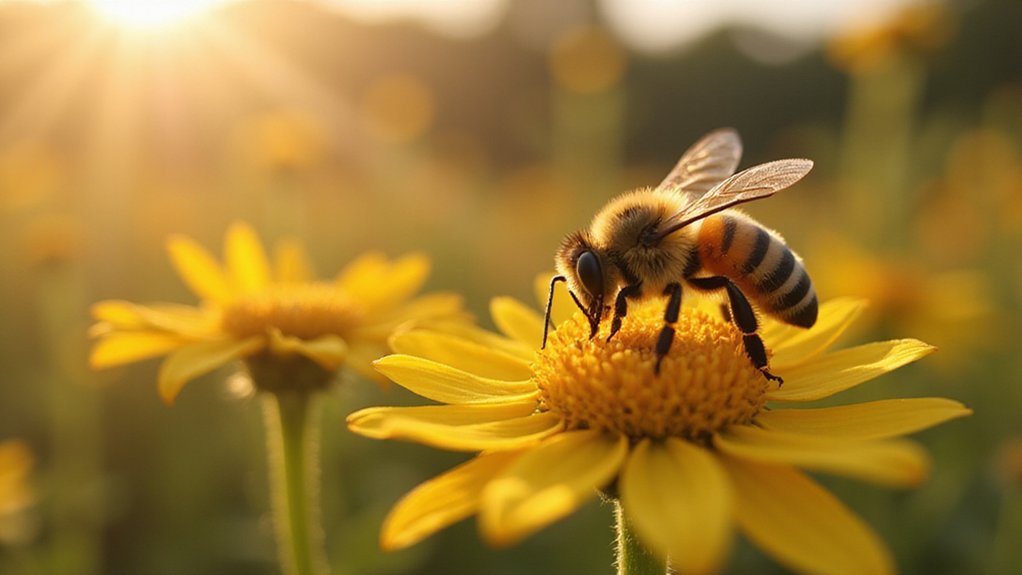
If you’ve ever been nervously eyeing a buzzing insect and wondered whether it’s a bee, wasp, hornet, or yellow jacket, you’re not alone. These insects can look similar but differ greatly in size, behavior, and the way they interact with humans.
Knowing these differences can help you stay safe and avoid unwanted stings. Keep reading to learn how to tell them apart.
How to Tell Bees, Wasps, Hornets, and Yellow Jackets Apart
To tell bees, wasps, hornets, and yellow jackets apart, start by examining their size and body features. Queen bees are usually larger than worker bees and may have distinctive markings, especially if the nest contains multiple queens. Bees tend to have fuzzy, golden bodies that help with pollination, while wasps and hornets have smooth, shiny bodies with black and yellow markings. Camouflage patterns also offer clues: bees often have mottled or subdued colors, whereas wasps and hornets display bold, contrasting stripes. Nest location is another indicator: bees build wax hives, typically hanging in trees or protected cavities, while wasps and hornets prefer paper or mud nests in sheltered spots. Behavior is a quick field guide—bees are generally less aggressive unless provoked, whereas wasps and yellow jackets can be more defensive and tend to be aggressive around food sources. Proper identification methods involve observing these physical and behavioral traits carefully, which can help you distinguish these insects more accurately and stay safe. Additionally, the body structure of these insects varies significantly, with bees having a robust, hairy build designed for pollination, contrasting with the more slender, less hairy bodies of wasps and hornets. Recognizing these physical traits can further aid in swift identification and safety.
What Do Their Bodies Look Like? Key Physical Differences
Bees, wasps, hornets, and yellow jackets have distinct body shapes that help you tell them apart. Bees generally have hairy, fuzzy bodies with a rounder, more robust appearance. Their abdomens are stout and bulky, especially in bumble bees. Their overall shape is thicker and more compact, which is useful for gathering pollen.
Wasps and yellow jackets, on the other hand, have smooth, shiny bodies with minimal hair. They feature a narrow “waist” between the thorax and abdomen, giving them a slender, elongated look. Hornets, a type of wasp, are larger and more robust but share the same smooth surface and narrow waist as other wasps.
Wing size also varies: bees typically have shorter, broader wings, which are better suited for carrying pollen while flying. Wasps and yellow jackets have longer, narrower wings, aiding their speed and agility in flight. Recognizing these physical differences helps in identifying the insect accurately.
How Big Are These Insects, and What Do Their Colors Tell You?
Insects of different species vary in size and color, which can help you identify them. Bees are generally smaller, measuring about 0.4 to 1.2 inches long, and usually display black and yellow or orange and brown coloration. They tend to be fuzzy, which aids in distinguishing them from other insects. Hornets are larger, reaching up to 2 inches in length, making them the biggest among these insects. They often have bold striping patterns that can include reddish or black-and-white coloration. Wasps tend to be shiny and hairless, with distinctive black bodies featuring yellow, orange, or white markings. Yellow jackets, a type of wasp, are easy to recognize by their bright yellow-and-black banding. While color and size give helpful clues, they shouldn’t be your only identifiers. Body texture and specific markings are essential for accurate identification, especially since many species can share similar hues, and understanding insect size and color patterns can greatly improve identification accuracy. Recognizing physical characteristics can also prevent misidentification, which is important for safety and pest management.
What Do Bees, Wasps, Hornets, and Yellow Jackets Eat? Feeding Habits Explained
Bees mainly feed on nectar and pollen. Nectar provides them with adult energy, while pollen is essential for larval development. Bees do not hunt prey; instead, their larvae are raised solely on pollen. Adult bees visit flowers to collect nectar and pollen, supporting their hive’s growth and sustainability. Additionally, some species have specialized behaviors or preferences that influence their feeding habits feeding behaviors.
Where Do They Build Their Nests? Common Locations and Structures
Bees, wasps, hornets, and yellow jackets each select specific locations and structures to build their nests, favoring sheltered sites that protect them from weather and predators. Many species prefer hidden spots such as hollow trees, wall voids, attics, or underground cavities. Bees often nest in enclosed spaces like hollow trunks or abandoned hives. Wasps tend to choose exposed sites, such as under eaves or on tree branches, where their nests are more accessible but still relatively sheltered. Hornets usually build in concealed areas like hollow trees or attics, and sometimes hang their nests from overhangs or utility poles. Yellow jackets prefer underground nests in soil cavities or abandoned burrows, with many hiding their colonies in foundation openings or hollow logs. Overall, they all seek sheltered cavities—above or below ground—for safety, insulation, and protection from the elements and predators. Recognizing the nesting preferences of each species can help in effectively managing and preventing unwanted invasions. Understanding nest construction can also aid in identifying and monitoring their locations to prevent conflicts.
How Do Their Social Structures and Lifespans Work?
The social structures and lifespans of bees, wasps, hornets, and yellow jackets differ significantly, reflecting their distinct roles within colonies. Queen bees, responsible for reproduction, can live up to three years, providing reproductive stability over multiple seasons. Worker bees, which handle colony defense, foraging, and nest maintenance, typically live for just a few weeks due to their intense activity and exposure to environmental stresses.
In contrast, wasp and yellow jacket workers usually survive only 12 to 22 days, focusing on defending the colony and gathering food rapidly during the active season. Their queens, however, can live up to a year, ensuring the colony’s survival across seasons. Hornets, a subset of social wasps, depend on cooperative brood care and nest defense. Queens in hornet colonies establish new nests annually, with long lifespans supporting ongoing reproduction, while worker hornets tend to have shorter lives aligned with the colony’s active period. This division of labor and lifespan strategy ensures colony stability and success in their respective environments.
Which Species Are Most Likely to Sting, and When?
Yellow jackets are the most likely to sting because they are highly aggressive and quick to defend their nests. They often respond to disturbance, especially late in summer when their colony activity peaks. These insects can sting multiple times without dying, increasing their threat level. Stings are common near food sources or when their nests are disturbed in enclosed spaces. Rapid or startling movements heighten the risk of being stung, while slow retreat usually prevents stings. Hoverfly mimicry and nesting camouflage can sometimes help yellow jackets avoid detection, but when threatened, they will attack. Nest defense behavior is a key factor in their aggressiveness. Hornets and wasps also pose a significant sting threat, especially when defending their nests. However, solitary bees and wasps are generally less aggressive and less likely to sting. Staying calm and avoiding nest areas significantly reduces the chances of being stung. Recognizing their stinging behaviors can help you react appropriately to avoid provocation.
Are These Insects Aggressive? Understanding Their Behavior
These insects vary greatly in their levels of aggression, especially when their nests or colonies are threatened. Bees are generally less aggressive and mainly sting when their hive is disturbed; they tend to sting only in defense of their colony. Wasps are more defensive, stinging when nests are approached or food sources are contested, particularly late in summer. Hornets are highly territorial and will defend their nests aggressively, often releasing attack pheromones to warn others. Yellow jackets are the most aggressive of the group, readily stinging multiple times when provoked, and their behavior primarily focuses on colony defense rather than random attacks. Recognizing these behavioral patterns helps you avoid provocation and reduces the risk of stings during pest control operations.
How Can You Properly Identify These Insects in Your Yard?
To properly identify these insects in your yard, start by examining their body shape and size, as each has distinct features. Bees tend to be robust and hairy, with a rounder body suited for pollen collection. Honey bees display yellow-brown banding and prefer hive environments, such as apiaries or sheltered areas. Bumble bees are similarly hairy but larger and often black and yellow with a more rounded, fuzzy appearance. Carpenter bees are shiny and black or dark-colored with a similar size to bumble bees but have a more polished look and prefer nesting in wood.
Wasps generally have a slender body with a smooth surface, and their color patterns vary widely from black and white to yellow and orange. Yellow jackets are a common type of wasp, distinguished by their stout bodies and recognizable yellow-and-black pattern. Hornets are larger and more robust than yellow jackets, often black or dark brown with white markings, and tend to build nests in cavities or under eaves. Recognizing these differences in body shape, coloration, and habitat preferences can help you accurately identify these insects in your yard.
What Mistakes Should You Avoid When Encountering These Insects?
When encountering flying insects like bees, wasps, or yellow jackets, remaining calm and movement-free is crucial. Sudden motions or swatting can provoke an aggressive sting response, increasing your risk of injury. If one is nearby, avoid quick gestures or running, as these actions may be perceived as threats. Wearing bright colors or floral patterns, and using scented products, can attract them unnecessarily; opt for neutral clothing and unscented lotions instead. Additionally, keep food and drinks covered, because open containers with sweet or scented substances draw insects seeking sugars or fragrances. Patience and stillness are your best defenses—staying calm reduces the chance of provoking a sting and helps keep both you and the insects safe. Never squeeze a stinger or apply improper chemicals, as this can worsen pain or cause more venom to release. Learning about honey pots and their function can also help you understand insect behavior and avoid accidental encounters.