Sealing canning jars without boiling might seem like a quick fix, but it’s not a reliable long-term method for preserving food.
Short-term options like vacuum sealing can help temporarily, but they don’t eliminate bacteria or spores that cause spoilage.
Knowing the safe, effective ways to seal jars is essential to keep food fresh and safe.
Keep reading to see what methods work best.
Is Sealing Jars Without Boiling Safe for Long-Term Storage?
Sealing jars without boiling is not safe for long-term storage. These methods, like inverting jars or oven sealing, do not reliably eliminate harmful bacteria or spores such as Clostridium botulinum. When you skip boiling, moisture can become trapped inside the jar, creating an environment conducive to bacterial growth and spoilage. Simply sealing a jar with a tight lid doesn’t guarantee safety because it doesn’t kill pathogens. Modern food-preservation techniques emphasize heat treatments like water baths or pressure canning, which are designed to both sterilize contents and ensure a proper seal. Without these validated methods, your preserved foods may look safe initially but carry serious risks for long-term storage. Proper sterilization techniques are essential to prevent bacterial contamination and ensure safe preservation. Additionally, relying solely on sealing without heat treatment overlooks critical hygienic principles, which are fundamental in pressure sterilization to guarantee safety.
Understanding Which Sealing Methods Are Safe and Effective
Not all sealing methods are safe for long-term food preservation. Vacuum sealing and inverted jars may create a temporary seal, but they do not guarantee pathogen control. Water bath canning and pressure canning are the only methods scientifically proven to prevent botulism and spoilage when done correctly. Alternative sealing techniques like paraffin wax or oven “canning” might appear effective by forming a seal, but they lack validated processing times and temperatures, which raises safety concerns. Always be cautious of jar seals that look perfect but have not undergone tested and approved procedures. A proper seal is confirmed by a concave lid that stores with slight vacuum pressure and correct headspace, usually about ¼ to ½ inch of headroom. Remember, a secure seal alone is not enough—validated heat processing methods are essential to ensure long-term safety of preserved food. Proper canning jar sterilization is a critical step that ensures the elimination of harmful microorganisms before sealing. This process is an important part of food safety protocols that can’t be overlooked. Additionally, understanding which sealing methods are safe and effective can significantly impact the longevity and safety of your preserved foods.
Vacuum Sealing Jars: Benefits, Limitations, and Proper Use
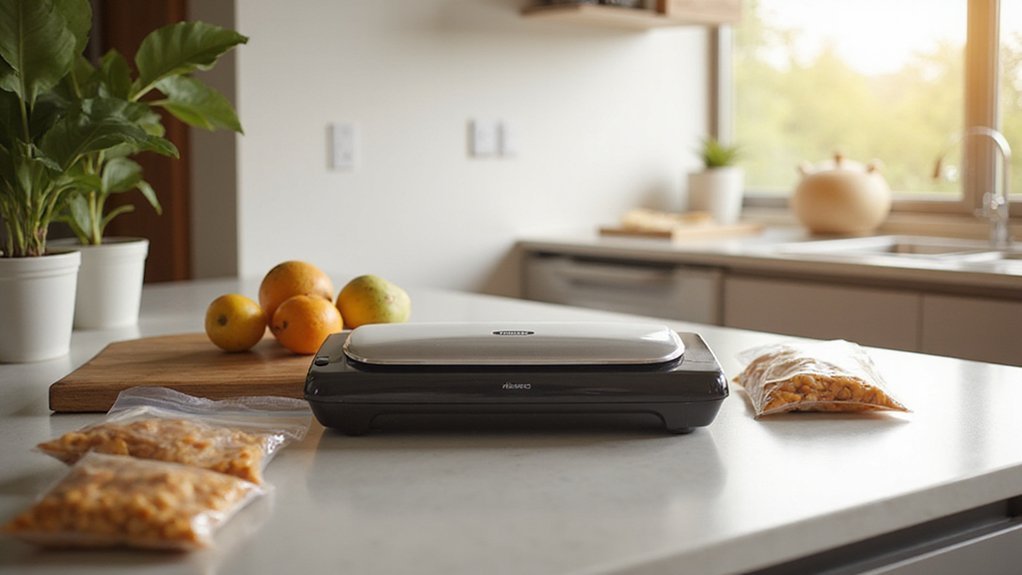
Vacuum sealing jars significantly extends the shelf life of dry foods by removing oxygen, which slows down oxidation, mold growth, and spoilage. Typically, it can increase freshness and preservation duration by two to four times compared to standard containers. This makes it especially effective for storing herbs, nuts, coffee beans, and dehydrated foods, helping them retain flavor, color, and aroma over longer periods. To achieve a proper vacuum seal, always use canning-rated wide-mouth mason jars with quality lids designed for this purpose. Keep in mind that vacuum sealing does not sterilize foods, nor does it make low-acid foods shelf-stable without refrigeration. Proper storage and handling are key to preserving food quality and extending its freshness. Additionally, understanding the best stove pipe kits for wood stoves can help you maintain safe and efficient heating, paralleling how proper storage techniques maintain food quality. Using the right vacuum sealing tools ensures you get a consistent seal each time, making your preservation efforts more reliable. Proper resealing techniques can also help you maintain the integrity of sealed jars over time, ensuring your stored foods stay fresh longer.
Are Wax Seals and Inversion Techniques Safe for Short-Term Storage?
Wax seals and inversion techniques are not safe for short-term storage. They do not involve validated heat processes to destroy bacteria and spores, which can lead to contamination risks. Wax seals can crack, shift, or fail over time, hiding signs of mold or spoilage that can cause foodborne illness. Inversion may create a temporary seal but does not ensure proper sterilization or pathogen destruction, especially for spores of bacteria like Clostridium botulinum. Although these methods might seem effective initially, they lack the reliability needed for safe storage. Experts recommend proven techniques such as water-bath canning for high-acid foods and pressure canning for low-acid foods. Following tested, approved procedures is essential to prevent contamination and ensure food safety during short-term storage.
Why Improper Sealing Methods Pose Risks and What to Avoid
Improper sealing methods significantly increase the risk of food spoilage and foodborne illness because they allow air, moisture, and microorganisms to enter the jar. When the seal is compromised, bacteria like Clostridium botulinum can grow, leading to dangerous toxins. Using old lids, damaged jars, or altering tested recipes undermines the sealing process and makes the jars unsafe to store food. Reusing lids or neglecting food residue on rims can prevent a proper seal and boost spoilage potential. Changing processing times, pressure, or ingredients without proper validation can leave harmful bacteria alive. Signs of seal failure include bulging lids, leaks, or damaged containers—these should never be ignored. Even if a jar looks sealed, flaws in the sealing method or process may hide serious risks. To stay safe, always follow tested recipes and invest in new, undamaged lids when sealing jars. Additionally, understanding canning jar lid reuse guidelines helps ensure food safety and proper sealing practices. Proper sealing techniques are essential for preventing contamination and ensuring that stored foods remain safe over time.
Moreover, ensuring that jars are properly sterilized beforehand can prevent lingering bacteria that may compromise the seal or lead to spoilage, highlighting the importance of proper sterilization methods.
How to Store Your Preserved Foods Safely for the Shelf
Proper storage conditions are essential to keep your preserved foods safe and maintain their quality over time. Start by thoroughly cleaning jars, lids, and bands to prevent rust and mold from developing. Choose a storage area away from heat sources such as ovens, dishwashers, or exterior doors. The environment should be cool, ideally between 50°F and 70°F (10°C–21°C), to slow down spoilage and preserve flavors. Low humidity is important because it prevents metal lids from rusting and reduces label deterioration. Good air circulation helps keep the jars consistently cool and prevents moisture build-up that could compromise seals. Keep jars out of direct sunlight, as exposure can cause heat buildup and nutrient loss. Store jars without ring bands so you can easily detect broken seals or spoilage. Regularly check your stored jars for any damage, ensure lids are tight, and confirm that vacuum seals are intact. Proper maple tap counts are also crucial in preventing potential spoilage issues related to sap quality and storage. Maintaining proper temperature control is vital for extending shelf life and preventing microbial growth. Finally, label each jar with its contents and the date of preservation to facilitate proper rotation and safety upkeep. Using proper storage techniques also helps preserve the integrity of your preserved foods over time.