Thinking about preserving your tomatoes for later? Making sun-dried tomatoes in a food dehydrator is a simple way to concentrate their flavor and extend their shelf life.
By choosing the right tomatoes and setting your dehydrator at the right temperature, you can easily create flavorful dried tomatoes at home.
Stay with me, and I’ll walk you through each step to perfect your process.
Why Use a Food Dehydrator for Drying Tomatoes?
Using a food dehydrator to dry tomatoes provides consistent and reliable results that are hard to achieve with other methods. The controlled temperature, usually between 125°F and 145°F, allows you to preserve the tomatoes’ concentrated flavor without losing valuable nutrients. The steady heat ensures even drying across all trays, preventing wet spots that could lead to mold or spoilage. Unlike sun drying, which depends on weather conditions and can expose produce to contaminants, a dehydrator offers a clean, indoor environment. The process typically takes between 6 and 18 hours, making it faster and more predictable than outdoor methods. Plus, the built-in airflow system efficiently removes moisture, resulting in dry, flavorful tomatoes that store easily and safely. To ensure your dried tomatoes remain safe and retain their quality, it’s important to understand proper sanitization methods for canning jars before storage. Being familiar with proper storage techniques can further extend the shelf life and preserve flavor. Additionally, understanding food safety procedures helps to prevent contamination during processing.
Choose the Best Tomatoes and Prepare Them for Drying
Choosing the right tomatoes and preparing them properly is essential for flavorful, consistent dried results. Inline, elongated, paste-type tomatoes like Roma or San Marzano are ideal because they dry efficiently due to their low moisture content and thick flesh. Cherry and grape varieties can also work well if halved to promote even drying. Using a garage wood stove can provide consistent heat that speeds up the drying process, especially in cooler or more humid environments. Thorough cleaning of the tomatoes helps prevent mold and spoilage during drying, ensuring quality results. Start by thoroughly cleaning the tomatoes to remove dirt and bacteria. Remove the stems and then cut the tomatoes into uniform slices about ¼ to ½ inch thick, making vertical cuts from stem to blossom end. Squeeze out excess juice manually or use a spoon to speed up the process, which helps reduce drying time. For enhanced flavor, soak the slices overnight in wine or sprinkle them with herbs before drying. Additionally, understanding the moisture content of the tomatoes can help you forecast drying time and achieve the best texture.
Arrange and Season Tomatoes for Even Drying
Ensuring even drying starts with how you arrange your tomato slices on the dehydrator tray. Use uniform slices about 1/4 inch thick to promote consistent moisture removal. Place each piece in a single layer without overlapping to guarantee airflow reaches all surfaces. Small gaps between slices improve air circulation, which is key for even dehydration. When arranging wedges or slices, position the skin side down and keep the thickest parts facing the air source for better moisture release. Seasonings like salt or herbs can be lightly sprinkled on the surface before drying—avoid heavy or wet marinades, as they hinder airflow. Blotting excess moisture and removing seeds enhance drying efficiency, helping your sun-dried tomatoes develop uniform texture and flavor. Proper arrangement techniques ensure optimal airflow distribution for even dehydration and perfectly dried tomatoes.
Set Your Dehydrator and Monitor Drying Progress
Set your dehydrator to the ideal temperature before starting the drying process. For sun-dried tomatoes, this means setting it between 125°F and 135°F. Thicker slices may require slightly higher temperatures to ensure even dehydration. Confirm the dehydrator reaches your target temperature within about 10 minutes to prevent prolonged uneven drying. During the process, check the progress every 4 to 5 hours. Focus on surface texture and internal moisture levels—look for leathery surfaces and darkening. Rotate the trays every 5 hours to promote even air circulation and prevent uneven drying. Watch the environment for humidity, as high humidity can extend drying times. In such cases, lowering the temperature or using the oven’s lowest setting helps. Be attentive for signs of doneness: fully leathery texture, dark color, and complete dryness. Properly setting and monitoring your dehydrator guarantees evenly dried, flavorful sun-dried tomatoes. Monitoring humidity is crucial because high humidity levels can significantly delay dehydration, requiring adjustments to the drying process to achieve optimal results. An awareness of food dehydration best practices can further improve your drying projects. Additionally, understanding dehydration conditions helps you optimize the process for different environments and tomato varieties.
Store and Use Your Sun-Dried Tomatoes
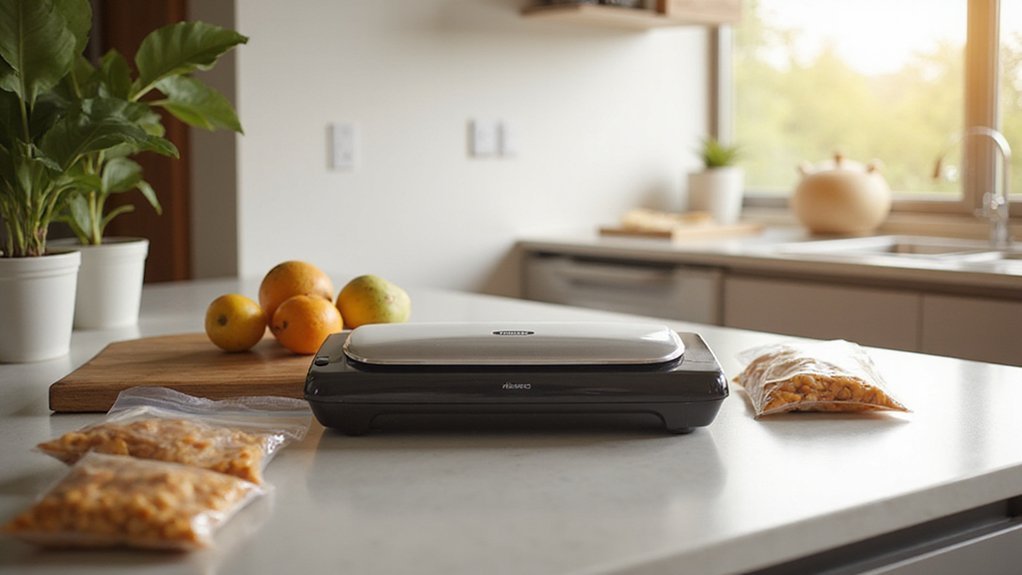
Once your sun-dried tomatoes are completely dried and cooled, storing them properly is crucial to preserve their flavor and texture. Airtight containers are your best bet for limiting moisture exposure and slowing down quality deterioration. For short-term storage, place small containers or zip-top bags in a cool, dark, dry spot like a pantry. Make sure the tomatoes are fully cooled before sealing to avoid condensation, which can cause mold or spoilage. This method keeps their natural flavor intact and makes it easy to add herbs or spices for flavor infusions. Using proper storage containers can also prevent crushing or damage during handling. If you plan to store them longer, refrigerate in a glass jar or airtight container, especially if they still have some moisture or contain added ingredients. Proper food preservation methods, including using the right containers and storage conditions, will help maximize their flavor and keep your sun-dried tomatoes fresh for future recipes. Additionally, using vacuum sealing techniques can further extend their shelf life and prevent exposure to air and moisture. For extended preservation, freeze the sun-dried tomatoes by spreading them in a single layer on a tray, then transferring them to freezer-safe bags once frozen. Employing moisture control strategies is essential for maintaining their quality over time.