If you’re wondering how to turn your ripe bananas into tasty, dried snacks, you’re in the right place.
Dehydrating bananas is straightforward and allows you to enjoy their sweet flavor long after peak freshness. By following simple steps, you can achieve perfectly dried bananas that are just the right chewiness and shelf-stable.
In the next section, you’ll learn exactly how to prepare bananas, set your dehydrator, and store them for optimal quality.
Let’s get started on making your own dried banana treats.
Understanding How Dehydrating Bananas Works
Dehydrating bananas works by removing moisture through controlled heat and airflow, turning fresh fruit into a shelf-stable snack. The process involves raising the temperature between 125°F and 140°F, which helps water molecules shift from liquid to vapor efficiently. Consistent airflow surrounds the banana slices, preventing vapor buildup and speeding up evaporation. As moisture leaves, the cell walls lose their rigidity, changing the texture from soft to leathery or chewy. Meanwhile, the sugars and starches become more concentrated, increasing the fruit’s sweetness. Proper temperature regulation and airflow are crucial to dry the slices evenly, ensuring they retain their natural flavor and do not become overly browned or tough. This method slows enzymatic activity and oxidation, helped by lowering water potential, which inhibits enzymes like polyphenol oxidase responsible for browning. Additionally, moisture removal is a key factor in ensuring even dehydration without compromising flavor. Ultimately, precise control over heat and airflow maximizes moisture removal and preserves the banana’s flavor and texture.
Choosing the Best Bananas for Drying
Choosing the right bananas for drying begins with selecting fruit at peak ripeness. Look for bananas with yellow skin that has minimal spots or just slight browning. These bananas provide optimal sweetness and caramelization, which are key to achieving rich flavor and appealing color in your dried slices. In addition, proper handling during harvesting and transportation helps maintain the fruit’s quality, ensuring they are ideal for dehydration. Fully ripe bananas, characterized by abundant brown spots, have the highest sugar content and yield crisp, sweet results. In contrast, underripe bananas lack enough sugars and may result in tougher, less flavorful dried pieces. Proper peeling techniques are essential to ensure even drying and prevent mushiness. Carefully peel the banana to get smooth slices, avoiding tearing or uneven edges. Store your bananas in airtight containers such as zip-lock bags or vacuum-sealed packs to maintain freshness and prevent spoilage before slicing. Additionally, proper storage methods play a significant role in preserving the fruit’s quality until you’re ready to dehydrate, making the drying process more successful. Practicing handling techniques consistently can significantly improve the quality of your dried fruit. Choosing the best bananas and storing them correctly lays the foundation for consistently delicious dehydrated fruit with appealing texture and flavor.
Preparing and Slicing Bananas for Dehydration
Peeling bananas fully before slicing is crucial to ensure smooth, even cuts and to prevent tough edges during dehydration. Use your fingers or a peeler to remove the skin in one smooth motion, keeping a separate container for peels to stay organized. Remove any strings, bruised areas, or damaged spots to achieve a clean, uniform finish. To avoid early browning, peel only the amount you need at a time and work in small batches. Cut the bananas into uniform slices, ideally 1/4 inch thick, using a sharp knife, mandoline, or egg slicer to maintain consistency. Proper handling and slicing techniques directly influence how evenly your dehydrator dries the fruit, resulting in better texture, appearance, and efficiency. Uniform slices help the bananas dehydrate evenly, and ensuring the pieces are properly prepared can also prevent issues like uneven drying and help maintain the quality of the dried fruit. Additionally, understanding the cost factors of food dehydrators can help you choose an efficient model that fits your budget and drying needs. Being aware of compatibility considerations can also ensure your dehydrator is suitable for different types of food, making the dehydration process smoother and more successful.
Setting Up Your Dehydrator for Perfect Results
To set up your dehydrator for perfectly dried banana chips, start by selecting a dehydrator with reliable temperature control, ideally featuring a fruit or “live foods” setting. Preheat the machine before adding your slices to ensure a consistent temperature throughout the drying process. Set the temperature between 135°F and 140°F; some models allow adjustments higher or lower depending on how quickly you want the bananas to dry. Use the same variety of banana for uniform moisture removal, and slice all pieces evenly to prevent uneven drying. Load the trays in a single layer without overlapping slices, leaving space between them to promote proper airflow. If your dehydrator recommends rotating trays, do so every few hours to ensure even exposure. Check your banana chips every 2 to 3 hours during drying to monitor their progress and prevent over-drying or burning. Ensuring a consistent temperature is crucial for optimal dehydration and avoiding uneven results. Additionally, understanding grain mill technology can help when processing different foods and ensuring uniform drying. Mastering food dehydration techniques can further enhance your results and efficiency in drying a variety of foods. Incorporating methodical temperature monitoring during dehydration can significantly improve the consistency of your dried products.
How to Track Drying Progress and Achieve the Right Texture
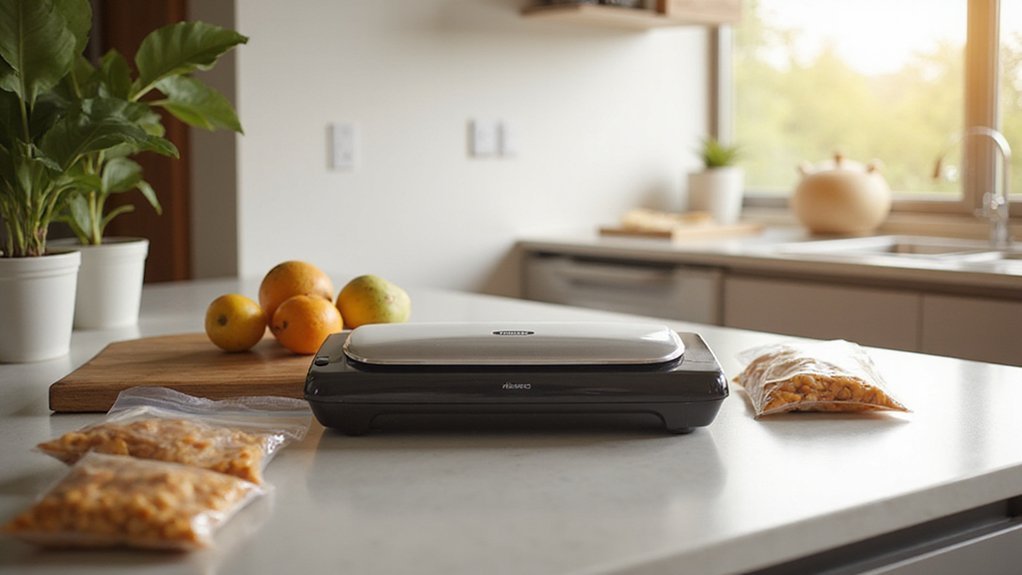
To accurately track the drying progress of your banana slices, focus on moisture testing and texture assessment. Wait 5 to 10 minutes after cooling the slices before testing, as warmth can hide residual moisture. Check whether the surface moisture has disappeared; the slices should feel dry to the touch rather than sticky or moist. Gently tear a slice—ideally, it should rip like paper—feeling leathery, flexible, and firm with no softness or fleshiness. Slight tackiness is acceptable if minimal, but soft, wet spots indicate under-drying and should be dried further. You can also use vacuum sealer bags to store dried slices and ensure freshness during storage. Conduct a container-condensation test by sealing cooled slices in a plastic bag. If no moisture appears inside after a few hours, the slices are properly dried. Understanding proper drying techniques is crucial, especially since uneven drying can lead to mold or spoilage during storage. Don’t rush the process; drying time typically ranges from 6 to 12 hours depending on the thickness of your slices. Arranging slices in a single layer ensures even drying and consistent results. Regularly monitoring these signs guarantees that your dried banana slices reach the right texture and level of dehydration. Keep in mind that consistent monitoring is key to achieving optimal results.
Tips to Prevent Browning and Maximize Flavor
To prevent browning and maximize flavor, applying a light coat of citrus juice such as lemon or lime is essential. The acidity from the juice slows oxidation by lowering the surface pH, helping the banana slices retain their vibrant color and tangy flavor. Use a brush, dip, or mist to evenly coat the slices before drying. Cover the stems with foil or cling wrap to limit ethylene release and air exposure, which slows browning at the peak ripening stage. Handle bananas gently and keep slices dry to prevent bruising and surface oxidation. Store bananas in a cool, dark place to minimize oxidation and color loss. If your bananas are ripe but not yet dehydrated, refrigerate them to preserve flavor while preventing the peel from darkening. Additionally, keeping banana slices dry and properly stored can help maintain their quality during dehydration. Proper storage also prevents enzymatic browning, ensuring your slices stay fresh and colorful during the dehydration process. Following these steps ensures your dehydrated banana slices stay fresh, flavorful, and visually appealing.
Knowing When Dried Bananas Are Ready to Store
Dried bananas are ready to store when they are fully cooled and exhibit uniform dryness. To test, feel a sample slice; it should feel leathery, without any stickiness or moist spots. A clean break or tear indicates proper dryness, while a chewy, raisin-like, or crisp texture may be acceptable depending on your preference. Visually, the slices should lack wet surfaces, have consistent coloration, and be evenly dried across slices that are about 1/4 inch thick. Ensure the bananas are completely cooled before storage to prevent moisture buildup that can cause mold. Perform a condensation check inside the storage bag—if no moisture is present, it’s safe to store. Avoid storing slices that are sticky or soft, as these signs of moisture can lead to spoilage. Proper drying involves understanding the dehydration process and the factors that contribute to achieving uniform dryness. Maintaining proper homesteading practices can further enhance the quality and longevity of your dried foods. Additionally, keeping dried bananas in a cool, dark place helps preserve their flavor and texture over time. Following these steps helps maintain the quality and freshness of your dried bananas for as long as possible.
Cooling, Storing, and Using Your Dried Banana Snacks
Allow your dried banana snacks to fully cool to room temperature before storing. This typically takes 30 to 60 minutes. Cooling on a clean, dry surface prevents condensation and softening, which helps preserve their crisp texture. Proper cooling also enhances flavor and prevents moisture from building up inside storage containers. For even moisture distribution, consider conditioning your banana slices in a glass jar, shaking it once daily for 5 to 7 days. This process promotes consistency in texture and prevents uneven drying. Store dried bananas in airtight containers such as glass jars, vacuum-sealed bags, or Mylar pouches with oxygen absorbers to maximize shelf life. Keep them in a cool, dark place away from humidity and sunlight, which can cause degradation. When using parchment paper in your food dehydrator, ensure it is used safely by placing it underneath the dry items and cutting it to fit the racks to avoid contact with the dehydrator’s heating element, reducing the risk of fire safety precautions. Use your dried bananas as snacks, in trail mixes, oatmeal, or rehydrate them for baking and cooking purposes.