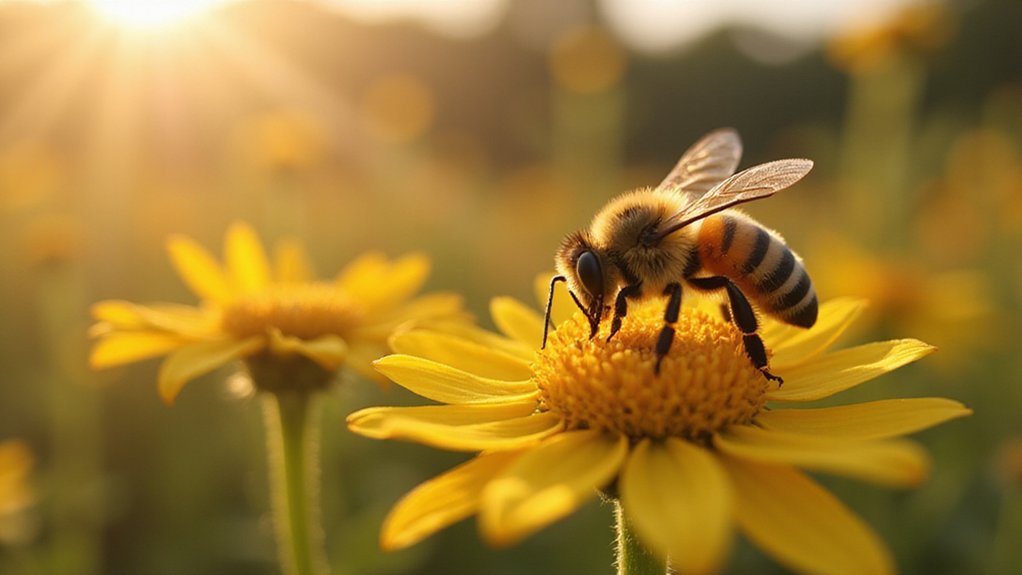
Wondering how to tell a sweat bee from a yellow jacket? The key differences are their size, body shape, and coloration. Sweat bees are small, chunky, and have shiny, metallic bodies.
Yellow jackets are larger, slim, and sport bold yellow and black stripes. Knowing what sets them apart can help you stay safe.
Keep reading to learn all the details.
What Are Sweat Bees and Yellow Jackets?
Sweat bees and yellow jackets are quite different in size and social behavior. Sweat bees are small, typically only about 1/4 inch long, and tend to be solitary creatures. They are attracted to human perspiration because of the salts and minerals, which they need for nutrition. These bees usually hover around flowers, collecting nectar and pollen, and individual females dig ground nests for their offspring. Their mating behaviors are simple and less aggressive, and they rarely defend their nests. Unlike yellow jackets, sweat bees do not generally pose a threat to humans due to their less aggressive nature social structure. Yellow jackets are much larger, measuring around 3/4 inch to 1 inch long, and are highly social insects. They live in large colonies with thousands of members, including queens, workers, and larvae. They tend to be aggressive when defending their nests, which are often hidden underground or in cavities. Yellow jackets actively scout for food, especially sugary drinks and proteins, often near human activity, and their social structure involves complex interactions centered around a single queen that fertilizes many workers. Their behavior and colony defenses make them more aggressive and potentially problematic around people.
How Can You Tell the Difference Between These Insects’ Looks?
Sweat bees and yellow jackets can be distinguished by their body shapes and color patterns. Sweat bees tend to have a more compact, rounded body with less tapered abdomens, giving them a softer, bumpier look. They often have fuzzy, hairy bodies that can be metallic green, bronze, or blue, and they usually lack the bold striping seen in other insects. Conversely, yellow jackets have a slender, elongated body with a narrow waist, appearing more streamlined and wasp-like. Their bright yellow and black stripes are sharply defined, creating a high contrast. Their bodies are smooth and shiny, with little to no fuzz. Recognizing these differences in body shape and color details makes it easier to identify each insect at a glance. Additionally, their body structure influences their behavior and how they interact with their environment. Understanding their appearance features can help you differentiate these common insects quickly and accurately. Observing the color patterns can also be key in distinguishing them, especially when they are at a distance.
What Are the Key Wing and Flight Differences to Spot?
Sweat bees and yellow jackets differ noticeably in their wing resting positions, flight behavior, and wing width. Sweat bees tend to hold their wings tightly folded when perched, a common trait among bees and wasps, which helps conserve energy and stay streamlined. In contrast, yellow jackets often keep their wings flat or slightly open when at rest, giving a different silhouette.
During flight, neither sweat bees nor yellow jackets hover like hover flies. Instead, they display a quick, direct flight style that is neither sustained nor stationary. Sweat bees usually have broader wings with a somewhat fuzzy appearance, which can be helpful to identify them. Yellow jackets, on the other hand, feature narrower, sleeker wings that match their streamlined bodies. wing structure plays a crucial role in telling these insects apart and understanding their behavior.
Pay attention to these wing clues—resting posture, flight pattern, and wing width—as they are valuable for distinguishing between these insects. Combining wing characteristics with other visual features will give you the most reliable identification. For example, observing their wing configuration can aid in quick identification, especially when observing their flight in natural settings. Recognizing these wing differences is essential for accurately identifying and understanding the behavior of sweat bees and yellow jackets.
Which Insect Is More Likely to Sting, and How Do They Behave When Provoked?
Yellow jackets are significantly more likely to sting than sweat bees, especially when provoked. They exhibit aggressive behavior, reacting strongly to nest disturbances, sudden movements, or being swatted at. When threatened, yellow jackets often swarm, chase, and sting multiple times without much warning, increasing the risk of multiple stings. Sweat bees, by contrast, are generally non-aggressive and tend to sting only when directly threatened or trapped. Their stings are usually mild, brief, and occur infrequently, with little escalation unless they are handled roughly or trapped. Overall, yellow jackets pose a higher risk because their behavior includes rapid escalation and repeated stinging, while sweat bees typically sting only in defensive situations with lower sting frequency. Additionally, their behavior when provoked can escalate quickly, making yellow jackets particularly dangerous in confrontational scenarios. [Understanding their stinging tendencies helps in avoiding dangerous encounters with either insect, especially since yellow jackets often react aggressively even to minor provocations.]
Where Do Sweat Bees and Yellow Jackets Typically Feed and Live?
Sweat bees and yellow jackets have distinct habitats for feeding and nesting. Sweat bees typically feed on nectar and pollen from flowers in open areas like fields, gardens, and grasslands. They prefer environments that are sunny and rich in floral resources, with easily accessible blooms. Their nests are predominantly underground, favoring well-drained, bare soil such as stream banks, sandy patches, or clearings. While some may nest in woody cavities, ground nesting remains the most common. Yellow jackets forage in both natural and human-made environments, feeding on sugary foods, proteins, and insects. They are often seen around picnic areas, trash cans, and flowering plants. Their nests are usually built in underground cavities, wall voids, or protected enclosures, depending on colony size and local conditions.
How Do Their Nests and Social Behaviors Differ?
Sweat bee nests are small and simple, primarily found in soil tunnels or existing cavities. Most sweat bees nest solitarily, with each female creating her own small, individual nest. These nests are usually less conspicuous and less protected, often unguarded, which reflects their solitary and less aggressive nature. In contrast, yellow jackets build large, enclosed paper nests made from chewed wood fibers. These nests are typically located underground, in wall voids, or in tree stumps and are protected by a paper envelope with a single entrance. Their colony structure is highly organized, containing hundreds to thousands of members including queens, workers, and males. This difference in nesting and social behavior highlights the social structure between the solitary, less guarded nests of sweat bees and the highly organized, defended colonies of yellow jackets. Yellow jackets’ nests are typically much larger and more vigorously defended than sweat bee nests. The organized colony hierarchy of yellow jackets allows for coordinated defense and resource gathering compared to the solitary nesting habits of sweat bees.
What Visual Cues Help Identify Sweat Bees Versus Yellow Jackets?
Sweat bees and yellow jackets can be distinguished visually by examining their body shape, size, and markings. Sweat bees are small and compact, typically measuring around 6 millimeters in length. They often appear rounded when resting on flowers, giving them a more squat and robust look. Their coloration tends to be subdued and iridescent, with a metallic sheen that shifts in different lights. In contrast, yellow jackets are larger, usually 10 to 16 millimeters long, with a narrower, wasp-like build. Their bodies are marked with bold yellow and black stripes, and they have a shiny, smooth surface. A key visual cue is the pinched waist between the thorax and abdomen, creating a distinct “wasp waist” appearance. During mating behaviors, sweat bees tend to stay close to flowers and show less contrasting coloration, whereas yellow jackets are more aggressive fliers with prominent striping. Seasonally, sweat bees are most active during warmer months when they forage on flowers, while yellow jackets can be spotted into late summer and fall. Recognizing these differences in size, body shape, markings, and activity patterns helps you quickly identify these insects. Additionally, body shape and markings are critical identifiers that can aid in distinguishing the two species more effectively. Observing their activity patterns can also provide clues to their identification, especially when seasonality and behavior are considered. Knowing their distinct behaviors can also assist in identification, especially when observing their activity in various seasons.
Why Is Proper Identification Important for Safety and Behavior?
Identifying whether an insect is a sweat bee or a yellow jacket is crucial for safety because their behaviors and potential for harm differ significantly. Yellow jackets tend to be more aggressive and can sting multiple times, especially when provoked near food, trash, or nests. In contrast, sweat bees are generally less aggressive and usually sting only if they feel threatened. Proper identification helps you assess the level of risk in various situations. Spotting yellow jacket activity indicates a higher threat, prompting more cautious responses. Recognizing sweat bees reinforces their role as pollinators and their lower risk to humans. By accurately telling these insects apart, you can prevent accidental provocation, reduce the chances of being stung, and make well-informed decisions about how to handle their presence. Additionally, understanding their behavioral differences can aid in implementing effective pest management strategies.
How Can You Safely Avoid or Handle Encounters With These Insects?
To safely avoid encounters with sweat bees and yellow jackets, focus on managing outdoor food sources and your behavior. Keep food covered and use containers with lids during outdoor meals to prevent attracting insects. Limiting outdoor cooking or dining during late summer to early fall, when yellow jackets are most active, can reduce risks. Be prompt in cleaning up crumbs, spills, and garbage, as these provide food cues that draw insects. Avoid open cans and uncovered drinks, especially sugary beverages, since they attract these insects. Wearing light-colored, long-sleeved clothing and closed shoes helps cover exposed skin and makes you less appealing to flower-seeking insects. Minimize the use of scented products like perfume or scented lotions, which can increase their interest. If an insect is nearby, move away calmly—you should avoid swatting, as this can provoke stinging. Lastly, steer clear of nests and contact pest control professionals for safe removal if necessary, especially during peak activity seasons.
What Should You Do If You Get Stung by a Sweat Bee or Yellow Jacket?
If you get stung by a sweat bee or yellow jacket, acting quickly can reduce pain and prevent complications. First, remove the stinger promptly—scrape sideways with your fingernail or a card, avoiding tweezers to prevent squeezing venom into your skin. Clean the area with soap and water to reduce infection risk. Apply a cold compress or ice pack wrapped in cloth for 10 to 20 minutes to help decrease swelling and numb the area.
Taking over-the-counter pain relievers like ibuprofen or acetaminophen can help reduce pain, while antihistamines may alleviate itching and allergic responses. Be mindful that stings are more common during certain months, especially when flowers and outdoor activity are plentiful. Stay alert during peak seasons and in floral-rich areas. Proper wound care is essential to prevent infection and facilitate healing. Monitor your symptoms closely, and seek emergency medical help immediately if you experience worsening reactions, difficulty breathing, or become stung multiple times.