If you’re wondering how to keep your food fresh longer, a vacuum sealer could be a game-changer. It removes air from specially designed bags or containers to create an airtight seal that slows spoilage and freezer burn.
But not all foods seal equally well, so knowing what works best can help you get the most benefits. Keep reading to learn more about the ins and outs of vacuum sealing.
What Does a Vacuum Sealer Do and How Does It Work?
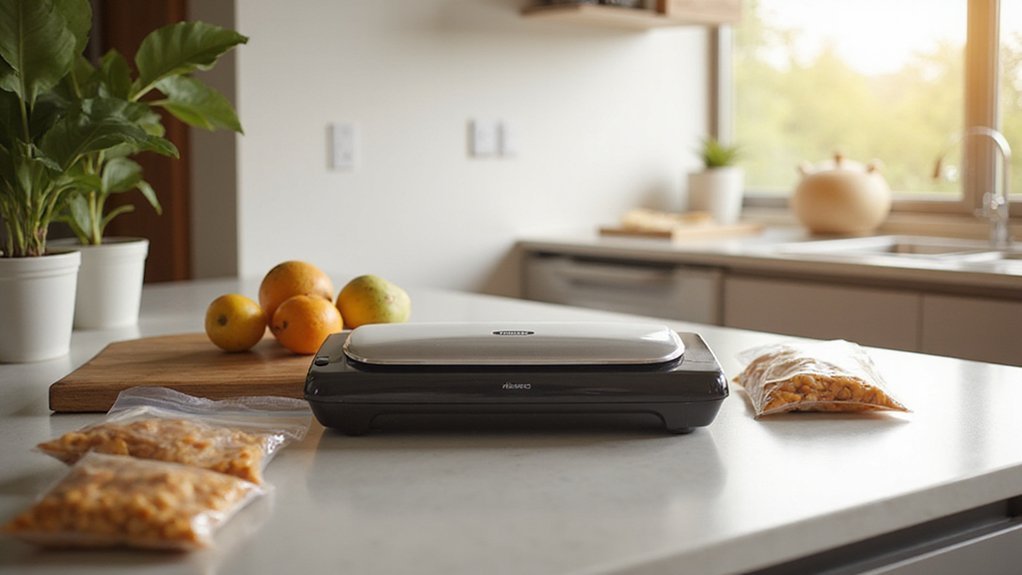
A vacuum sealer works by removing air from a specially designed bag or container before sealing it shut. This process creates an airtight environment that preserves food longer. To do this, you place your food inside compatible bags or containers, then position them in the sealer. The device’s vacuum pump is activated, drawing air out and establishing a low-pressure, oxygen-poor space inside. Once the air is removed, the sealing mechanism uses a heated strip or bar to melt the bag edges together, forming a secure seal. This airtight environment helps prevent moisture, air, and contaminants from entering, which slows microbial growth and oxidation, thereby extending the freshness of your food. Additionally, proper sanitization methods for the jars and equipment are essential to maintain food safety and maximize preservation. Ensuring that your jars and sealing equipment are thoroughly sterilized can also prevent spoilage and ensure the longevity of stored foods. Understanding food preservation techniques can further enhance the effectiveness of vacuum sealing.
Why Use a Vacuum Sealer? Benefits Explained
Using a vacuum sealer offers several key benefits that significantly enhance food storage and preservation. It can extend the freshness of your food up to five times longer compared to traditional methods. This means your meals stay flavorful, textured, and nutritious for a much longer period, making meal planning easier and supporting healthier eating habits.
By removing oxygen from packaging, vacuum sealing slows down spoilage and oxidation, which helps maintain the food’s flavor and nutritional quality. It also reduces the risk of freezer burn, which can ruin the texture and taste during long-term storage. This protection leads to less food waste and more efficient use of groceries, ultimately saving you money.
Furthermore, vacuum-sealed packages are compact and airtight, making storage more organized and space-efficient. This can simplify bulk buying and meal prep, as packages stack neatly and take up less room. Additionally, understanding the dehydrator process can help you produce long-lasting, flavorful snacks at home. Proper food handling techniques combined with vacuum sealing can also minimize the growth of bacteria and other pathogens, ensuring your food remains safer and fresher for longer periods. Overall, a vacuum sealer helps you keep your food fresher, reduces waste, and supports cost-effective, convenient meal storage.
Which Foods Are Safe and Best for Vacuum Sealing?
Raw meats like beef, pork, and chicken are best suited for vacuum sealing before freezing. Proper sealing reduces freezer burn and slows oxidation, keeping the meat fresher longer. Cooked meats also store well in the refrigerator for 2 to 3 weeks if sealed correctly. Fish and seafood can be vacuum sealed as well, but it’s important to remove them from their packaging before thawing to minimize the risk of botulism. Blanched vegetables such as green beans and carrots benefit from vacuum sealing to stop spoilage enzymes and prolong freshness. Raw cruciferous vegetables are less suitable unless they are pretreated, such as by blanching. Dry pantry staples including rice, pasta, and dried herbs last longer when vacuum sealed in the right containers, protecting them from moisture and pests. Proper packaging techniques are essential for maintaining quality and extending shelf life across all food types. Additionally, vacuum sealing reduces exposure to airborne bacteria, which can help prevent spoilage and foodborne illnesses. Being aware of food safety practices is vital to ensure that vacuum-sealed foods remain safe for consumption over time. Using the correct vacuum sealer settings can also enhance the preservation process, making your food last even longer.
Essential Safety Tips for Vacuum Sealing Food
To ensure safety when vacuum sealing food, proper hygiene and cross-contamination control are essential. Always wash your hands thoroughly before and during the process to reduce the risk of bacteria transfer. Use clean utensils such as tongs or forks instead of direct hand contact when handling raw ingredients. Keep work surfaces, cutting boards, and tools spotless to prevent bacteria from spreading. Wash and dry produce thoroughly before sealing to remove dirt and surface bacteria. Using a clean, designated workspace helps prevent the spread of germs and ensures a safer sealing environment. Temperature control is also critical: avoid sealing hot or warm foods, as steam can compromise the seal and promote bacteria growth. Cool cooked foods quickly to refrigerator temperature before packaging. After sealing, check the seal for integrity, ensuring the bag is properly closed without leaks or gaps. Leave enough headspace in the bag for expansion, and ensure the bag opening is dry to guarantee a secure seal. Following these hygiene practices will help maintain safe food storage and prolong freshness.
Foods That Don’t Seal Well and Why
Foods with high moisture content, delicate texture, or gas production often seal poorly in vacuum bags. Water-rich foods like mushrooms, tomatoes, and leafy greens tend to cause weak seals because water is drawn out during vacuuming, disrupting the seal process. Soft cheeses and fragile fruits can deform or become crushed under the vacuum’s suction, affecting their appearance and texture. Additionally, foods such as broccoli or cauliflower release gases after sealing, which can cause puffing or break their seals—leading to spoilage or packaging failure. Warm or freshly cooked foods are also problematic because they release steam and moisture that undermine the seal and may cause condensation inside the bag. To improve sealing success, wait until such foods cool completely or pre-treat them, such as blanching vegetables, to reduce moisture and gas release. Proper handling techniques can also significantly enhance the effectiveness of vacuum sealing for these foods. Being aware of the specific properties of different foods helps in choosing the right preparation and sealing methods to maintain freshness longer. Additionally, understanding whether a vacuum sealer bag is compatible with your device can prevent sealing issues and ensure a secure closure. Using appropriate sealing techniques and following manufacturer instructions can also help improve the overall success rate.
How Long Does Vacuum Sealing Keep Food Fresh?
Vacuum sealing can keep food fresh for 3 to 5 times longer than traditional storage methods. For refrigerated items, this technique extends shelf life from about 1 to 2 weeks to 1 to 2 months. When frozen, meats and dry staples can remain quality-approved for 2 to 3 years. Fruits, berries, and cheeses also benefit, often lasting months longer. However, the actual duration depends on the food type, freshness at sealing, and storage conditions. Maintaining proper temperature and handling with care are essential. Vacuum sealing isn’t a magic bullet—food can spoil if mishandled or stored improperly. It maximizes preservation but still relies on good practices for safety and quality. Using a downspout diverter can prevent water damage to your home’s foundation, ultimately protecting your stored food supplies. Exploring advanced preservation methods like freeze drying can further enhance long-term storage options, especially for fragile or perishable items. Additionally, understanding food safety guidelines is crucial to ensure that properly sealed food remains safe to consume over time.
Foods and Materials You Should Avoid Vacuum Sealing
Avoid sealing high-moisture foods like fresh mushrooms, cooked fruits, and many vegetables, as excess water can promote spoilage inside an oxygen-free environment. These foods often have poor compatibility with vacuum sealing because the moisture can lead to bacterial growth and mold development. Soups and stews should be pre-frozen before sealing, since liquid can interfere with creating a proper vacuum seal and cause leaks. Soft, delicate items such as Brie or fresh berries can easily bruise or collapse under the pressure, resulting in texture loss and an unappealing appearance. Gas-producing vegetables like broccoli or cabbage, as well as fermented foods like kimchi, can release gases that may compromise the seal over time. Hot, warm, or freshly cooked foods must be cooled thoroughly before vacuum sealing to prevent condensation and bacterial growth inside the bag. Additionally, avoid sealing spoiled, moldy, oily, or sharp items such as dried foods or utensils, as these can puncture the bag and pose health risks. Homestead practices can also influence the best types of food to vacuum seal safely.
Should You Vacuum Seal Before Freezing or Refrigerating?
Vacuum sealing before freezing or refrigerating significantly extends food freshness, especially if done properly. For long-term storage, vacuum sealing before freezing is ideal because it reduces oxygen exposure, which helps prevent freezer burn, moisture loss, and flavor deterioration. Thin, flat packaging created by vacuum sealing also promotes even freezing, making it easier to store larger quantities efficiently. When refrigerating leftovers or perishable proteins, vacuum sealing still helps by slowing spoilage and maintaining moisture, but it does not replace the need for a consistent refrigerator temperature. Properly sealing food in clean, airtight containers or bags ensures safety and preserves quality over time. Additionally, vacuum sealing slows oxidation, further preserving the nutritional value and overall freshness of the food.