Wondering whether vacuum sealing or canning is better for preserving your food? The quick answer is that vacuum sealing is great for short-term storage of sturdy, low-moisture items like meats and grains.
On the other hand, canning is ideal for long-term preservation of delicate, high-moisture foods like fruits and vegetables.
By understanding how each method works, you can choose the best option for your needs.
Keep reading to find out the key differences and how to decide between them.
Key Differences Between Vacuum Sealing and Canning
Vacuum sealing preserves food by removing oxygen from the packaging, which significantly slows microbial growth. However, it does not kill bacteria, yeasts, or molds present in the food. This method is ideal for short-term storage or freezing to maintain flavor and texture but offers less safety for long-term preservation. Canning, on the other hand, uses heat to sterilize food, destroying harmful microorganisms and creating a shelf-stable product suitable for storage at room temperature. The thermal process ensures longer shelf life and enhanced safety but may alter the food’s texture or flavor. Additionally, proper jars and lids are essential for effective sterilization and long-lasting results. Your choice depends on your primary goal—vacuum sealing for preserving taste and quality over shorter periods, or canning for ensuring safety and longevity. Proper processing techniques in canning are vital to prevent contamination and spoilage during storage. Understanding the benefits of sterilization can help you select the most suitable preservation method for your needs.
How Vacuum Sealing and Canning Preserve Food and Extend Shelf Life
Vacuum sealing and canning both significantly extend your food’s shelf life by slowing the processes that lead to spoilage, but they do so through different methods. Vacuum sealing works by removing oxygen, particularly air, from the packaging. This reduction in oxygen content inhibits microbial growth, slows oxidation, and minimizes moisture loss, which helps preserve flavor and prevents freezer burn. It creates an environment with little to no air, allowing food to stay fresh up to five times longer in the fridge, freezer, or pantry. Proper storage conditions are essential to maximize the benefits of vacuum sealing, ensuring food remains in optimal condition for extended periods.
Canning, however, relies on heat processing to destroy bacteria, molds, and yeasts. The high temperatures used during canning also create a vacuum seal, preventing new microorganisms from contaminating the food. The safety and method of canning depend on the acidity of the food. High-acid foods like fruits or pickles can be canned with less processing, while low-acid foods such as meats and vegetables require pressure canning to eliminate bacteria effectively. When applied correctly, both methods ensure food safety while maintaining quality, making them reliable options for long-term preservation.
Which Foods Are Best Preserved by Vacuum Sealing or Canning
Foods with low moisture content or sturdy textures respond best to vacuum sealing. Dry goods like pasta, rice, flour, sugar, beans, and cereal can last up to five years when stored properly using vacuum sealing. Raw meats such as beef, poultry, and fish benefit greatly, with freezer life extending to 1–3 years; seafood, in particular, can last around two years. Hard cheeses and baked goods also respond well, maintaining quality for several months. In contrast, high-moisture soft produce like tomatoes, mushrooms, and delicate fruits generally do not respond well to vacuum sealing. These items are prone to spoilage and texture damage because the removal of air can cause them to become mushy or spoil faster. For these foods, canning is often the better choice, as it preserves their quality and texture more effectively. Understanding cold frames can help homesteaders extend their growing season and preserve delicate produce more successfully. It is important to note that canning green beans in a water bath canner is safe when proper procedures are followed, as green beans are a low-acid food requiring boiling water canning to prevent botulism.
How Vacuum Sealing and Canning Keep Food Safe From Microbes
Vacuum sealing does not sterilize food but effectively slows microbial growth by removing oxygen. This environment discourages the proliferation of aerobic microbes such as molds and bacteria that need oxygen to thrive. It also reduces oxidation, which helps extend the freshness by delaying rancidity and flavor loss. However, microbes already present in the food, including harmful bacteria, may still survive because vacuum sealing doesn’t kill microbes. Some pathogens, like certain bacteria, prefer low-oxygen conditions and can grow more rapidly in a vacuum-sealed environment, especially if temperature control is not maintained. Proper packaging materials and refrigeration or freezing are crucial because vacuum sealing alone isn’t sufficient to keep food safe at room temperature. To prevent contamination, always handle foods safely and store sealed items at appropriate temperatures. While vacuum sealing prolongs freshness, it primarily acts by slowing microbial growth rather than completely eliminating microbes. Understanding how microbial activity works can help homesteaders optimize their food preservation methods. Ensuring the right storage conditions is essential for maintaining food safety and quality over time.
What Equipment Do You Need for Vacuum Sealing and Canning?
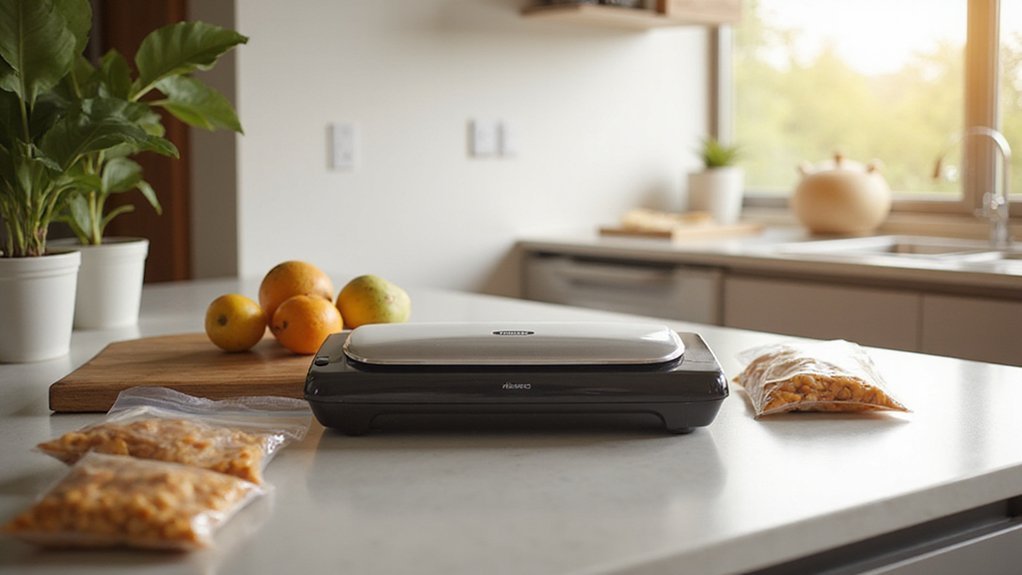
To effectively preserve food through vacuum sealing or canning, you’ll need specific equipment designed for each method. For vacuum sealing, a vacuum sealer machine is essential, ideally one with jar or accessory ports for sealing in jars. You’ll also need sealer rolls, specialized vacuum bags, jar sealing adapters, and supporting tools like a sharp knife, tongs, and labels to organize your preserved items. Upgrading your equipment, such as choosing chamber sealers for larger quantities, can improve efficiency and consistency. Using the right equipment ensures a higher success rate and maintains the food’s quality and safety throughout the preservation process.
In canning, essential tools include a water-bath canner or pressure canner to process jars safely. You will need jars, lids, and bands to seal your food securely. Accessories like jar lifters, canning funnels, and racks help handle hot jars safely and ensure proper placement during processing. Each piece of equipment plays a crucial role in maintaining safety and quality, making your preservation efforts reliable and effective.
How These Methods Affect Nutrients and Flavor
Vacuum sealing better preserves nutrients and flavor compared to canning. Because no heat is involved, vacuum sealing avoids the nutrient degradation caused by the high temperatures of canning, especially for sensitive vitamins and minerals. This method maintains the original taste and aroma more effectively by locking in delicate flavors and reducing oxidation. Canning, on the other hand, uses heat which can alter the flavor slightly and result in some nutrient loss, particularly for vitamins sensitive to heat. It also softens textures, changing the food’s original feel. Vacuum sealing is ideal for short-term storage when maintaining nutrients and flavor is crucial, especially in refrigerator or freezer settings. Proper storage techniques and sealing methods can further enhance the effectiveness of vacuum sealing. Canning, while offering a longer shelf life, may impact both flavor and nutrient quality due to the heat involved in the process. Freezing Canning Jars tips and safety guidelines can help prevent jar breakage or spoilage during storage.
How to Decide Between Vacuum Sealing and Canning for Your Food
Vacuum sealing is best for short-term storage, frozen foods, or protecting dry items from air exposure. It is quick and convenient, making it ideal for herbs, grains, or prepped meals. However, vacuum sealing does not sterilize food and is not suitable for long-term pantry storage, since it doesn’t eliminate bacteria or spores. Canning, on the other hand, offers long-term shelf stability by killing microorganisms through heat processing. It is better suited for high-moisture foods like fruits, vegetables, and cooked dishes that require room-temperature storage. If your goal is extended storage with less risk of spoilage, canning provides a safer, more durable solution. In contrast, pressure canning involves a specialized process that ensures food safety through high-temperature processing, making it more suitable for low-acid foods. For short-term or freezer-friendly needs, vacuum sealing remains a practical option.
Common Problems in Food Preservation and How to Fix Them
Contamination from poor sanitation or damaged packaging is a common cause of food spoilage. To prevent this, always ensure equipment is thoroughly cleaned before use. Regular cleaning of sealing surfaces and utensils helps eliminate bacteria and residues that can compromise food safety. Inspect jars and lids carefully for chips, cracks, or deformities because damaged containers can prevent proper sealing, leading to spoilage. Using high-quality, intact packaging materials is crucial to maintain airtight seals. Proper handling practices, including washing hands and sanitizing work areas, also reduce the risk of introducing contaminants. Proper sanitation is essential throughout the entire preservation process to minimize microbial growth. Being aware of pest damage, such as holes or chew marks in packaging, can help identify other potential contamination sources. Additionally, understanding the sterilization process and its correct timing helps ensure the longevity and safety of preserved foods. Ensuring correct storage conditions further helps maintain food safety over time. By maintaining cleanliness and inspecting packaging, you can significantly extend the shelf life of preserved foods and ensure they stay safe to consume.
Combining Vacuum Sealing and Canning for Optimal Storage
Combining vacuum sealing and canning provides a highly effective method for long-term food preservation by leveraging the advantages of both techniques. You begin with vacuum sealing to remove air from the packaging, which slows oxidation and inhibits microbial growth. This step is especially beneficial for dehydration or fermentation processes, as it creates a controlled, low-oxygen environment. Once sealed, the food is heated in a water bath or pressure canner to sterilize it, killing bacteria, molds, and especially dangerous spores like those of botulism. Proper procedure involves sealing the jars with vacuum first, then processing them in a sterilizing bath at the correct temperature—typically 121°C (250°F) for the recommended time based on food type and acidity level. Ensuring that the equipment reaches and maintains these high temperatures is critical, especially for low-acid foods, to prevent the growth of harmful pathogens. Using proper sterilization techniques can help optimize the preservation process and extend the shelf life of your foods effectively. Additionally, understanding the correct processing conditions is essential to ensure safety during the canning process. This method is particularly suited for a wide range of perishable foods, making it ideal for those seeking to maximize storage life without sacrificing safety or quality.