Struggling to keep your food fresh or save space with your belongings? A vacuum sealer might just be the handy tool you need. It works by removing air from bags or containers to lock in freshness, slow spoilage, and help you organize better.
Understanding how it works can help you choose the perfect one for your needs, and the details are right below.
What Are Vacuum Sealers and How Do They Work?
A vacuum sealer removes air from bags or containers and then seals them airtight to preserve their contents. It works by creating a low-oxygen environment that slows spoilage and oxidation, which is essential for food preservation and storing other items. To use it, you place your items into compatible packaging materials such as special bags or containers. The vacuum sealer’s pump then extracts most or all of the air, creating negative pressure inside the package. Additionally, some models are designed with specialized vacuum channels to ensure a more secure and uniform seal. Next, a sealing method—often involving a heating element or sealing bar—fuses the bag shut. Some models use vacuum chambers that handle the entire bag inside a sealed chamber, while others seal the open end of a bag directly. Once sealed, the airtight closure prevents outside air from re-entering, which extends the freshness and storage life of your items. Proper maintenance of seal integrity and cleanliness can further enhance the effectiveness of the vacuum sealing process and prevent contamination.
Which Type of Vacuum Sealer Is Best for Your Needs?
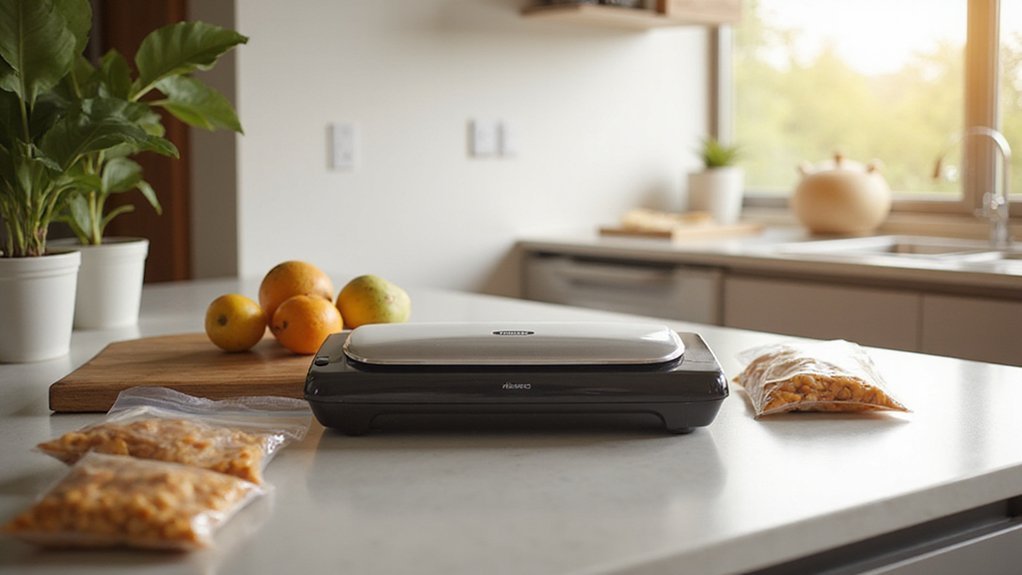
External vacuum sealers are best suited for dry or semi-dry foods. They offer a good balance of affordability, versatility, and ease of use. These units work well for sealing snacks, cheese, and frozen proteins. However, they require special bags designed for vacuum sealing, which can increase ongoing costs over time. External sealers are generally compact, making them convenient for everyday home use without taking up much space. They are ideal if you frequently seal solid foods and don’t deal much with liquids or wet ingredients. Nonetheless, you should be aware that they might not perform as well with liquids or moist foods, which are better handled by other types. Comparing pressure canners and cookers reveals important differences that affect sealing choices, especially when handling moist or liquid-rich foods. Additionally, the choice of vacuum sealing machine should be made based on your specific food storage needs and the types of food you typically process. For those focusing on long-term storage and minimizing exposure to light and air, understanding resealing Mylar bags can be a valuable complementary skill to extend food freshness.
Why Vacuum Sealing Extends Food Freshness and Storage Time
Vacuum sealing can extend your food’s freshness and storage time by up to 3 to 5 times longer than traditional methods. It works by removing oxygen from the packaging, creating a low-oxygen environment that slows down the deterioration process. Microbial growth, including bacteria, mold, and yeast, requires oxygen to thrive, so restricting their presence helps prevent spoilage. This process also reduces oxidation, which prevents fats from becoming rancid and maintains food quality. Additionally, vacuum sealing minimizes freezer burn and dehydration by limiting exposure to air and moisture, helping your food retain its natural juices, flavor, and texture. Vacuum sealing also helps preserve delicate vitamins, ensuring food stays nutritious for longer periods. Overall, using a vacuum sealer alongside proper storage temperatures can significantly prolong shelf life and reduce food waste.
Non-Food Uses of Vacuum Sealers in Industry and Home
Vacuum sealers have many non-food uses in both industry and home environments. You can use them to compress clothing, bedding, and soft items, saving space while keeping these items protected from dust and moisture. They also provide protective storage for important documents, electronics, and collectibles, shielding them from environmental damage over the long term. Understanding different vacuum sealer types can help users choose the most suitable model for their specific needs. Knowing the different types of vacuum sealers** can ensure optimal use for various purposes. Vacuum sealing is ideal for emergency gear** as well—first aid kits and outdoor supplies stay clean, dry, and compact during transport or storage.
Creative applications include making ice packs, sealing tools between projects to prevent loss or damage, and preserving bottles of wine or infused oils. In industrial settings, vacuum sealers help secure sensitive parts and equipment, reducing the risk of corrosion and contamination. Overall, vacuum sealers enhance storage efficiency, protect valuable items, and help organize both personal and professional spaces effectively.
How to Choose the Right Vacuum Sealer: Key Features to Consider
Selecting the right vacuum sealer depends on understanding which features best match your needs. Seal quality is crucial—look for models that consistently create strong, airtight seals that hold through freezing or sous vide cooking. Adjustable heat or sealing modes are helpful for handling different bag thicknesses and preventing weak seals or melting. Bag compatibility is also important; consider the maximum width the sealer can accommodate and whether it works with generic, nonproprietary bags to save costs over time. For more intensive tasks or commercial use, chamber vacuum sealers offer better liquid handling and broader bag options. Additionally, features like moisture sensors, manual sealing options, and easy-to-clean parts enhance convenience and safety. Incorporating a proper sealing technique ensures your preserved items stay fresh longer and reduces the risk of spoilage. Including food preservation techniques, such as proper sealing and storage methods, can further extend the freshness and shelf life of your preserved items. Balance your needs with the setup process to ensure your sealer functions reliably and efficiently. Balancing these features with your budget and the durability of the unit will ensure you choose a sealer that suits your household or professional needs effectively.