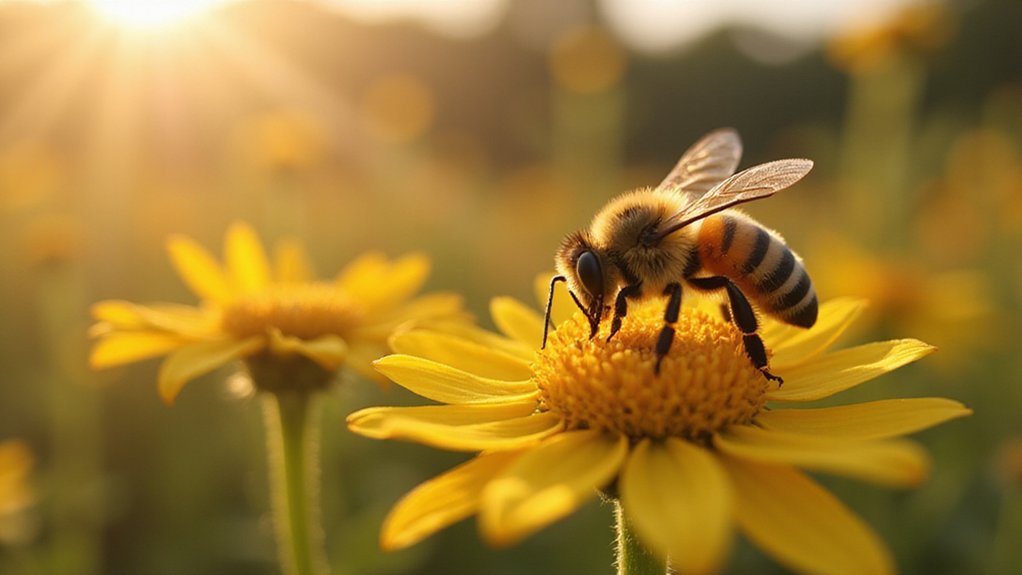
Wondering how to tell a bumble bee from a yellow jacket? These insects look quite different once you know what to look for.
Bumble bees are larger, around an inch long, with a fuzzy, rounded body.
Yellow jackets are smaller, sleeker, and have smooth, shiny bodies.
Keep reading to learn the key differences and stay safe around these insects.
How Can You Tell Bumble Bees From Yellow Jackets?
Bumble bees are generally larger than yellow jackets, making them easier to identify at a glance. Bumble bees typically measure about 1 inch in length, with a rounded, robust body covered in dense, fuzzy hair. In contrast, yellow jackets are slimmer and about 0.5 to 0.75 inches long, with a smooth, shiny exoskeleton and less hair. Their flight tends to be swift and direct, often darting between flowers with purpose, while bumble bees move more slowly and hover around blooms. Watching their behavior at flowers can help you distinguish them: bumble bees usually linger, feeding deliberately, whereas yellow jackets tend to visit flowers briefly or not at all, focused more on scavenging or hunting than pollinating. Recognizing specific body markings can also assist, especially when size comparisons are difficult. Additionally, body coloration can sometimes aid in identification, but it is less reliable than observing size, fuzziness, and flight style. Being attentive to their behavior at flowers provides crucial clues since yellow jackets are more often seen around food sources like sugary drinks or meat, unlike bumble bees which primarily focus on pollination.
What Are the Key Differences in Appearance and Body Shape?
Bumble bees and yellow jackets differ significantly in their appearance and body shape. Bumble bees have a bulkier, more rounded body, appearing wider across the thorax and abdomen. They are covered in dense, fuzzy hair, which makes them look plump and bulky. Their body lacks a sharply defined waist, giving them a more uniform, rounded profile overall. In contrast, yellow jackets are slender and more streamlined, with a narrow waist that sharply constricts between the thorax and abdomen. Their bodies are smooth and glossy, with minimal hair, resulting in a sleek, shiny appearance. These differences in shape and surface texture are key indicators: the fuzzy, rounded form of bumble bees contrasts with the slim, wasp-like silhouette of yellow jackets, making identification more straightforward. Surface texture also plays a role, as yellow jackets tend to have a smoother appearance compared to the hairy, textured look of bumble bees. Additionally, the body shape of these insects is one of the most noticeable features when trying to tell them apart, highlighting how their distinct body contour helps in quick identification. Sometimes, the body profile can be further distinguished by the insects’ movement and behavior, aiding in identification even from a distance.
How Do Fuzzy Bumble Bees and Sleek Yellow Jackets Look?
Fuzzy bumble bees and sleek yellow jackets are easily distinguishable by their body texture and shape. Bumble bees have bodies covered in dense, velvety hair, giving them a fuzzy appearance that extends across the head, thorax, abdomen, and legs. This creates a rounded, bulky look. In contrast, yellow jackets feature smooth, shiny bodies with minimal visible hair, giving them a sleek, polished appearance. Their bodies are more elongated and streamlined, with a sharp waist that separates the thorax and abdomen. Additionally, bumble bees are larger and have a more robust, rounded silhouette, while yellow jackets are smaller and slender with a more angular shape. These differences help you identify them at a glance. Their distinct physical features are often associated with their respective behaviors and habitats, body texture and shape. Recognizing these physical traits can also help you understand their behaviors and habitats better. It’s also important to note that their appearance differences reflect their different roles in the environment, such as pollination or nesting habits.
Where Do Bumble Bees and Yellow Jackets Build Their Nests?
Bumble bees and yellow jackets build their nests in distinctly different locations, reflecting their behaviors and habitats. Bumble bee nests are usually well-hidden in natural cavities such as old rodent burrows, hollow logs, or beneath thick grasses, offering insulation and protection. They may also use man-made structures like birdhouses or abandoned furniture filled with cotton batting. These nests tend to be smaller and more concealed, making them harder to find. In contrast, yellow jackets prefer ground mounds with openly visible soil entrances, or they nest inside man-made structures such as wall voids, attics, or beneath decks. Their nests are generally larger and less camouflaged, which makes them more accessible and easier to spot. They are capable of thriving in a variety of environments and often establish their colonies in more exposed locations.
How Big Are Their Colonies and Where Do They Live?
Bumble bee colonies typically contain between 50 and 400 individuals, though under ideal conditions, they can be as small as 20 to 50 or as large as 1,700. Colony size depends largely on the season and resource availability. During spring and early summer, the population rapidly grows as worker bees build the colony, often reaching its peak. Later in the season, the colony size declines after new queens and males are produced and the colony disperses. Most colonies are started by a single queen and last about 2 to 6 months, often aligning with a single breeding cycle. Colony size can also be affected by environmental factors that influence resource distribution. Bumble bees nest in various locations, including underground cavities, surface nests, or above-ground spaces like tree holes and structures built by humans. Their habitats are usually dry, enclosed, and insulated, which helps signal seasonal growth or decline within their relatively short lifespan. The specific nesting site can influence colony success, with protected areas providing better conditions for development, and nesting habits play a crucial role in their survival and colony growth. Additionally, some species are adaptable and can change their nesting preferences based on environmental changes.
What Is Their Behavior Around Humans and Nests?
Bees’ behavior around humans and nests varies notably between species. Bumble bees are generally gentle and tend to ignore people unless their nest is disturbed. When humans approach their nests, bumble bees usually remain calm unless the nest is directly threatened. If the nest is accidentally harmed, such as by mowing or trimming equipment, they tend to become more defensive, and stings may occur. The stinging usually happens when the colony is disturbed or harmed directly. Additionally, unlike some aggressive insects, bumble bees typically only sting when provoked or directly threatened, aligning with their defensive behavior. In contrast, yellow jackets are much more aggressive and protective of their nests. They often respond with repeated stings if disturbed and may chase intruders away from a distance. Yellow jackets actively defend their nest entrances and are attracted to human food, garbage, and sweet drinks, increasing annoying encounters. Their attack behavior is more offensive, involving persistent chasing and multiple stings, unlike bumble bees which only sting when their nest is directly threatened. This difference in insect aggression can help homeowners recognize and react appropriately to each species’ presence. Being aware of species-specific behavior can make it easier to avoid unwanted stings and handle encounters safely.
What Do Bumble Bees And Yellow Jackets Eat, And How Do They Pollinate?
Bumble bees eat nectar and pollen, which are essential for their survival and reproductive success. They collect nectar with their long proboscis, storing it in their crop to carry back to the hive. Pollen is gathered on specialized hairy hind legs called pollen baskets or corbiculae, enabling them to transport large quantities efficiently. Their flower preferences vary to meet their nutritional needs, often favoring plants that provide high-quality nectar and pollen. As they visit flowers for feeding, they inadvertently transfer pollen from one bloom to another, making them vital pollinators for many wild plants and crops. Their seasonal activity aligns with flowering periods, allowing them to support plant reproduction when a variety of blooms are available. Bumble bees play a significant role in pollination, supporting both wild ecosystems and agricultural productivity. In contrast, yellow jackets primarily consume sugary substances like nectar, ripe fruit, and plant juices, relying less on pollen. They also hunt insects for protein, which is primarily fed to their larvae. Since their diet centers on sugars, yellow jackets contribute minimally to pollination, with their foraging generally resulting in only incidental pollen transfer. Additionally, their pollination role is typically limited compared to that of bumble bees.
How Do Sting And Pain Levels of Bumble Bees And Yellow Jackets Compare?
The sting and pain levels of bumble bees and yellow jackets are generally similar, both causing moderate discomfort. Both insects are rated 2 on the Schmidt Sting Pain Index, indicating comparable baseline sting pain. However, yellow jackets tend to cause slightly stronger sting sensations because of their higher venom potency. Bumble bee stings are usually sharp but brief, with less lingering pain, because they inject smaller amounts of venom with lower toxin concentrations. Yellow jacket stings often feel sharper, burning, or hot-poker-like, and tend to result in more intense immediate pain and irritation afterward. The increased venom potency in yellow jackets leads to stronger local reactions, swelling, and tissue irritation, making their sting more painful overall. Additionally, understanding how to use food dehydrators can provide useful knowledge on various topics, demonstrating the importance of proper technique and safety. Recognizing insect venom effects can also help in managing sting reactions and preventing complications.
How to Safely Manage or Avoid Nests of These Insects?
To safely manage and avoid nests of bumble bees and yellow jackets, it’s essential to observe them from a distance without disturbing the colony. Recognize activity patterns by noting peak movement times and entry points. Do not block entrances or try to remove active nests yourself, as aggressive colonies can respond with multiple stings. Instead, wait until the colony becomes inactive, usually in late fall or winter, and consider consulting a professional for removal. To prevent attracting these insects, remove food debris like sweet drinks, exposed trash, and fallen fruit, which draw yellow jackets near homes. Seal gaps and voids in siding, soffits, or attics to reduce potential nesting sites. Keeping lawns tidy, removing clutter, and inspecting early in the season can help identify colonies before they grow large. Always stay calm, move slowly, and avoid dark clothing near active nests to lower the risk of stings and ensure safe management. Understanding how these insects operate can assist in effective prevention and safe handling.
When Should You Call a Pest Control Professional?
You should call a pest control professional when you notice signs of a nest in hard-to-reach places like within walls or structural voids. Indoor infestations or nests located near high-traffic areas such as doorways or children’s play zones require expert assessment. If the nest is large, active, or near areas where people frequently gather, professional treatment is the safest option. Delaying intervention can lead to bigger problems, as nests may contain hundreds of insects, making DIY removal dangerous and unlikely to succeed. Signs like frequent buzzing, visible entry points, or suspecting an inside nest indicate it’s time to contact a professional. Acting quickly reduces the risk of a worsening infestation, minimizes sting danger, and ensures proper removal and identification for safety and peace of mind.