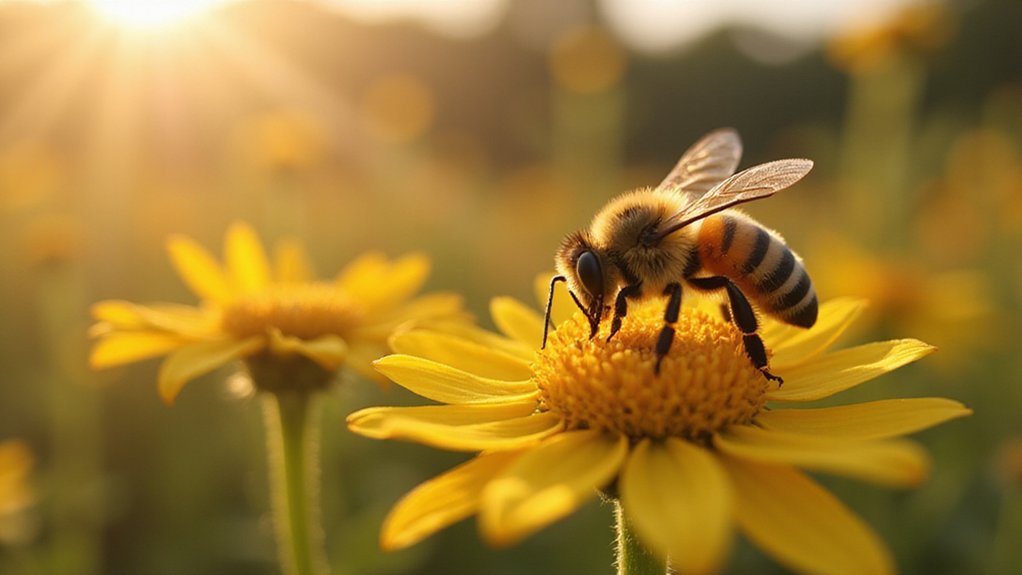
Ever wonder how to tell a bee from a yellow jacket when they’re buzzing around? The key is in their size, shape, and behavior. Bees tend to be rounder and fuzzier, often hovering near flowers.
Yellow jackets are slim, shiny, and more aggressive around food and trash. Keep reading to learn the quick tricks for telling these insects apart.
How to Quickly Tell a Bee From a Yellow Jacket
Yellow jackets are more aggressive and tend to chase or sting multiple times, especially when defending their nests. In contrast, bees are generally less aggressive and usually only sting if provoked, often only once before dying. During late summer and fall, yellow jackets become more active around food scraps, trash, and sugary drinks, darting and zigzagging near picnic areas. Bees, on the other hand, are more common during spring and flowering periods, calmly foraging between flowers. Knowing how to sanitize canning jars can help you safely clean up after outdoor activities and reduce attracting these insects. You can quickly tell them apart by observing their flight patterns, food preferences, and behavior near nests. Yellow jackets tend to fly erratically and aggressively around human food and trash, while bees hover more gently over flowers. Their coloration also differs slightly: yellow jackets usually have a more defined black and yellow striped pattern, while bees are often more hairy with a more subdued coloration. Recognizing these distinctions allows you to identify them instantly, even from a distance. Observing their insect behavior can also provide clues, as yellow jackets are known for their swift, unpredictable movements, unlike the steadier flight of bees. Additionally, the nest locations of these insects often vary, with yellow jackets building ground nests and bees typically nesting in hives or cavities.
Key Physical Differences: Body Shape, Hair, and Color
Bees are easier to distinguish from yellow jackets based on their body shape, hair, and color. Bees generally have a plump, rounded, and compact body, giving them a fuzzy, velvety look. Their dense hair helps in collecting pollen and gives them a softer, fuller appearance. Yellow jackets, on the other hand, have a slender, elongated body with a narrow waist, making them look sleek and polished. They have little hair and a shiny surface, reflecting their streamlined shape. In terms of color, bees tend to have softer tones like golden-brown or amber, which vary depending on their diet and season. Yellow jackets are marked with bright yellow and black contrasting patterns, emphasizing their sharp and smooth appearance. These physical traits further aid in their identification, especially when observing their distinctive body shape and coloration patterns. Additionally, their notable behavioral differences, such as aggression levels and foraging habits, can also help in telling them apart.
How Wings and Body Profile Help Differentiate the Insects
Wings and body profile are key visual clues that help you tell bees apart from yellow jackets. Yellow jackets have shorter, narrower wings that fold tightly against their bodies at rest, giving them a sleek and streamlined appearance. Honey bees have broader, more opaque wings that lie flat over their rounded, fuzzy bodies, resulting in a softer, more robust outline. The antennae shape also differs: bees have longer, more curved antennae, while yellow jackets tend to have straighter and more segmented antennae. Body shape reflects their behaviors and roles: yellow jackets have slender, streamlined bodies suited for quick flights and efficient mating, whereas honey bees have more compact, hairy bodies built for pollen collection and hive work. Their bodies also contrast in surface texture: shiny and smooth in yellow jackets, hairy and robust in honey bees. Noticing the body profile differences and wing placement can dramatically improve your ability to identify these insects accurately, especially when their colors are similar or confusing. Recognizing their distinctive body textures can also help distinguish them at a glance. Additionally, observing their behavioral patterns can provide further clues to correctly identify each species.
Behavioral Clues: Flight Patterns and Activity Areas
Bees and yellow jackets can be distinguished by their flight patterns and activity areas. Bees tend to follow steady, direct flights between flowers and their hive, characterized by calm and coordinated movements. They often stay close to blooming plants during daytime flowering seasons and move smoothly without sudden jerks. Their color variations—typically golden-brown with fuzzy bodies—add to their identification. In contrast, yellow jackets display erratic, darting, and zigzag movements, especially when searching for food. They land with quick, side-to-side motions and often swoop near human food or trash. Their activity peaks late in summer and early fall, and they are commonly attracted to sugary drinks and proteins at outdoor gatherings. While bees focus on floral resources, yellow jackets patrol around trash cans, picnic tables, and nests, following restless and unpredictable flight paths. Flight patterns can be key visual clues for distinguishing the two.
Nesting Habits and Sting Tendencies: What Darker Clues Reveal
Abandoned nests or signs of underground activity indicate yellow jackets, as they commonly nest in the ground, in old rodent burrows, or soil cavities. These nests are often hidden and only revealed through disturbance or digging. Yellow jackets build paper-like, multi-tiered nests with a gray-brown exterior, blending into natural or concealed locations. In contrast, honey bees prefer elevated or enclosed wax hives typically found in trees, walls, or attics. Behaviorally, yellow jackets are more aggressive and will sting repeatedly if disturbed near their nests. Honey bees usually sting defensively only once, often in response to a direct threat, and rarely pursue intruders once the threat is gone. Nesting habits can also provide clues to their identification, as certain species prefer specific environments and structures. Additionally, observing the sting tendencies of each species can help distinguish them; yellow jackets tend to sting multiple times, while honey bees usually sting once and then retire. Recognizing nest locations can further aid in their identification, as yellow jackets often remain closer to the ground, while honey bees tend to stay near their hives in elevated places.